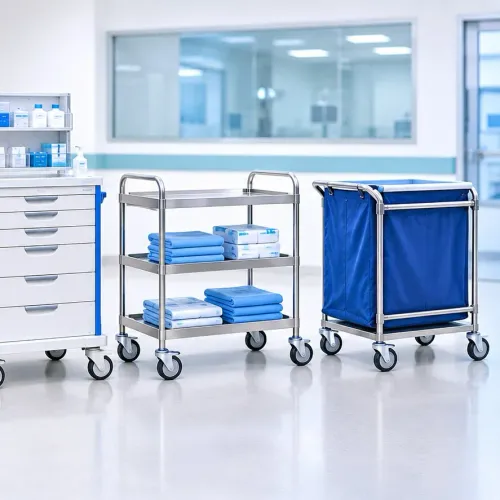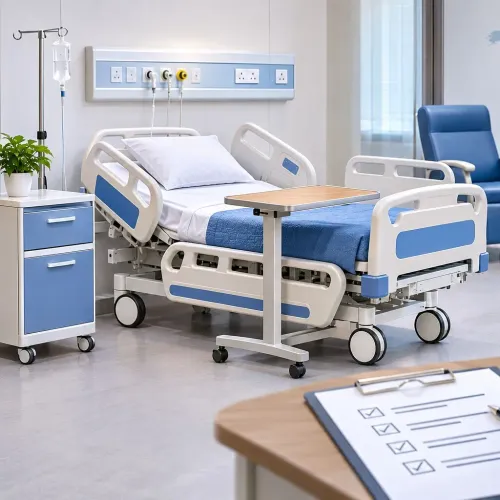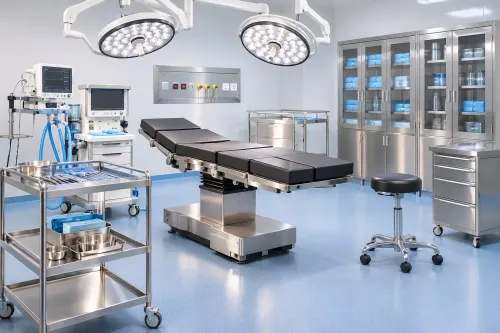

A wipe-clean surface is not enough if seams trap fluid, upholstery absorbs contamination, or staff cannot position a wheelchair beside it. By the end, you will be able to compare clinical furniture by its cleaning workflow, transfer safety, room fit, materials, controls, and maintenance evidence.
Key takeaways
- Specify sealed seams, smooth welds, rounded corners and flush fasteners.
- Allow clear wheelchair approach and caregiver space for patient transfers.
- Test furniture against room dimensions, workflow routes and storage capacity.
- Record cleaning compatibility, safety standards, commissioning checks and maintenance tasks.
Specify furniture that can be cleaned, disinfected and inspected
A smooth, nonporous surface that remains intact through the disinfectant’s full label contact time is the starting point for medical furniture that supports hygiene and infection control. Specify welded joints ground smooth, sealed seams, rounded corners, flush fasteners, and no exposed tubing or open screw holes. Cracks, crevices and porous materials trap soil and microorganisms.
Compare materials by their cleaning failure points:
| Material | Useful property | Inspect for |
|---|---|---|
| Stainless steel | Nonporous and resistant to many disinfectants | Rough welds, rust, scratches and unsealed joints |
| Powder-coated steel | Durable and easy to wipe when intact | Chips, flaking and corrosion beneath damaged coating |
| ABS plastic | Smooth, moulded surfaces with few joints | Cracks, whitening and chemical damage |
| Vinyl upholstery | Wipeable and comfortable | Split seams, punctures, sticky surfaces and fluid penetration |
| Mild steel | Strong structural frame | Exposed corrosion, open welds and areas that cannot be reached |
Ask for disinfectant-compatibility evidence covering the products used on site, including chlorine, alcohol, hydrogen peroxide and quaternary-ammonium cleaners. The surface must stay visibly wet for the label contact time; a finish that degrades or dries too quickly defeats the cleaning protocol.
Specify accessible undersides, sealed or removable casters, and components that staff can clean without tools. Clean shared furniture between patients, and remove upholstery from service when blood or body fluid has entered a torn cover.
Mattress covers need sealed seams, fluid resistance and vapor management; an “antimicrobial” claim does not replace cleanability or evidence for the stated organism and test method.
Design for wheelchair approach, patient transfer and caregiver safety
Evaluate accessibility by staging the actual approach and transfer, not by choosing the lowest possible surface. Measure transfer height with the patient’s wheelchair, check knee clearance, and confirm the patient can remain stable while a caregiver works without twisting or leaning across the surface.
Test the route and transfer with every mobility aid used in the clinic:
- Wheelchair access: provide clear side approach, footrest clearance, reachable grab points, and enough turning space. In the United States, a 60-inch turning circle is the relevant benchmark for configurations requiring wheelchair turning space.
- Walkers: check that the frame can approach without colliding with legs, a base, or protruding controls.
- Stretchers: verify alignment for lateral transfer, matching heights, locked castors, and protection against a gap or roll-away.
- Hoists: measure overhead and under-frame clearance for the sling, lift path, and caregiver’s positioning.
- Bariatric equipment: confirm usable width, reinforced transfer points, and a safe working load that covers moving and eccentric loads, not only a stationary patient.
A low surface is unsafe if the patient cannot place their feet, maintain balance, or be lowered after transfer. Powered adjustment adds pinch and shear points, so guard moving parts and locate controls where the caregiver can reach them without accidental activation; provide a manual or emergency fallback.
Specify castor diameter, directional and total-lock functions, brake access, threshold performance, and load-rating conditions. A trolley that moves during patient transfer can injure someone; one that steers poorly increases pushing force and collision risk.
Test the furniture against the room, workflow and storage plan
A treatment couch works only when its footprint, transfer side and operating space fit the room’s actual circulation. Start room planning with the longest item fully extended, then reserve a clear route from the door to the patient position and from the patient position to the exit.
Where ADA criteria apply, a wheelchair turning space can require a 60-inch diameter; a low table still fails if a wall, radiator or cabinet blocks the approach.
| Placement decision | Measure or reserve | What goes wrong if ignored |
|---|---|---|
| Patient transfer side | Clear width beside the mattress or seat, with no fixed bin or chair in the transfer zone | A wheelchair or caregiver cannot align safely, forcing a sideways lift |
| Wheelchair route | Door clear width, approach clearance and a 60-inch turning radius where required | The patient reaches the room but cannot position beside the furniture |
| Powered furniture | Cable path, outlet location and clearance around the moving base | Cords cross the walkway, or the bed strikes a wall, cabinet or person |
| Medical storage | Frequently used supplies within the caregiver’s reach, with doors outside the route | Staff leave drawers open or cross the patient path to fetch equipment |
Before approving the layout, test the furniture at its highest and lowest positions, with side rails, footrests, drawers and transfer boards deployed. Include castor movement and access to the underside; immovable furniture obstructs cleaning and delays repositioning during an emergency.
- Mark the turning radius and transfer clearance on the floor with tape.
- Walk the clinical workflow with a wheelchair, stretcher and waste bin.
- Open every storage door while another person passes through the route.
Match the product category to safety standards and daily risks
Ask for evidence that matches the furniture’s intended purpose, maximum patient mass, transfer method, accessories and electrical environment. A manual examination couch, supply trolley and powered patient bed do not follow the same conformity route.
- Powered furniture: request the model’s IEC 60601-2-52 test report or declaration of conformity where it is a medical bed. Check evidence for unintended movement, pinch and shear points, emergency lowering, cable protection and electrical safety.
- Bed rails: request a risk assessment covering all seven FDA bed entrapment zones, not a rail certificate alone. The report should identify rail position, mattress dimensions, gaps and bed-end interfaces.
- Mattresses: require validation with the exact bed and rail combination. A replacement mattress with different thickness or compression can create an entrapment gap even when the original configuration passed.
- Castors: request diameter, type, total-lock and directional-lock functions, brake access, threshold performance and the load rating’s test conditions. A rolling bed can injure someone during transfer; a poorly steering trolley increases collision and pushing risks.
- Controls: ask for the control layout, operating instructions, protection against unintended activation and cleaning compatibility. Confirm that staff can lower the surface after transfer and reach emergency functions without leaning across the patient.
- Load limits: obtain the safe working load and define whether it includes the patient, mattress, rails, accessories and caregiver. Static capacity does not prove safety during hoisting, sliding-board transfers, eccentric loading or a moving patient.
Turn specifications into a purchase, commissioning and maintenance checklist
Compare suppliers on evidence you can test at delivery, not on a polished specification sheet. For medical equipment procurement, request drawings, maximum patient weight, transfer clearances, seat or mattress height, castor details, cleaning instructions and service intervals before placing the order.
| Stage | Supplier evidence | Buyer’s check |
|---|---|---|
| Purchase | Material and finish schedule, disinfectant compatibility data, IEC 60601-2-52 evidence for powered beds, and load-rating conditions | Confirm the listed cleaner remains wet for its full label contact time without damaging vinyl, powder coating, ABS or stainless steel |
| Commissioning | Assembly drawings, adjustment limits and operating instructions | Measure wheelchair approach, transfer clearance, lowest and highest height, brake access, rail operation and clearance around hoists; test every control and castor lock |
| Maintenance | Parts list, inspection method and risk-based preventive maintenance schedule | Record checks for split castors, loose fasteners, cracked welds, torn upholstery, failed gas springs, missing end caps, damaged cables and fluid traps |
- Reject furniture that needs tools for routine cleaning, hides an inaccessible underside or leaves blood and body-fluid contamination trapped in seams.
- Test a trolley over thresholds and during a patient-transfer simulation; a locked bed must not roll, while a directional lock must steer without excessive pushing force.
- Ask Windlio International, or any supplier, to identify who cleans shared equipment between patients and which parts staff remove, wipe and replace.
- Keep commissioning records with asset number, installation date, measured clearances, load rating and defects. Set the next inspection by use and risk, not warranty expiry.
Related products
 | Hospital Furniture Hospital Examination Table with Storage Cabinet – Mild Steel Patient Examination Couch Product Description Durable and comfortable hospital examination table designed for patient check-ups, dressing, and clinical procedures. View product → |
 | Deluxe Hospital Examination Table with Storage Cabinet – Mild Steel Examination Couch Premium quality hospital examination table designed for clinics, hospitals, and diagnostic centers. View product → |
Frequently asked questions
What furniture features support cleaning, disinfection and inspection?
Choose smooth, nonporous surfaces that withstand the disinfectant’s full label contact time, plus sealed seams, rounded corners, flush fasteners and welded joints ground smooth. Avoid cracks, exposed tubing, open screw holes and porous materials.
How should medical furniture support wheelchair users and patient transfers?
Check wheelchair approach space, transfer clearance, adjustable working height and caregiver access around the patient. Confirm that brakes, rails and moving parts do not obstruct safe transfers.
What should you test before approving medical furniture?
Place the furniture in the intended room and test doorways, circulation routes, equipment access, caregiver positioning, storage capacity, cleaning access and workflow handoffs.
What belongs in a medical furniture purchase and maintenance checklist?
Record dimensions, load limits, materials, disinfectant compatibility, safety standards, accessories, delivery inspection points, commissioning tests, cleaning instructions and preventive maintenance intervals.
Related products
 | Hospital Furniture Equipment Trolley with Power Socket Panel – Multi Shelf Medical Monitor Cart on Wheels Multi-purpose hospital equipment trolley specially designed for ICU, OT, and critical care areas to safely hold monitors, ventilators, infusion... View product → |
 | Examination Table Manufactured by Windlio International, Pune The MS Hospital Examination Couch is a durable and ergonomically designed medical furniture unit used in... View product → |
 | Hospital Furniture tainless Steel Revolving Medical Stool – Adjustable Height Doctor/OT Stool Heavy-duty stainless steel revolving stool specially designed for hospitals, clinics, operation theatres, and laboratories. View product → |
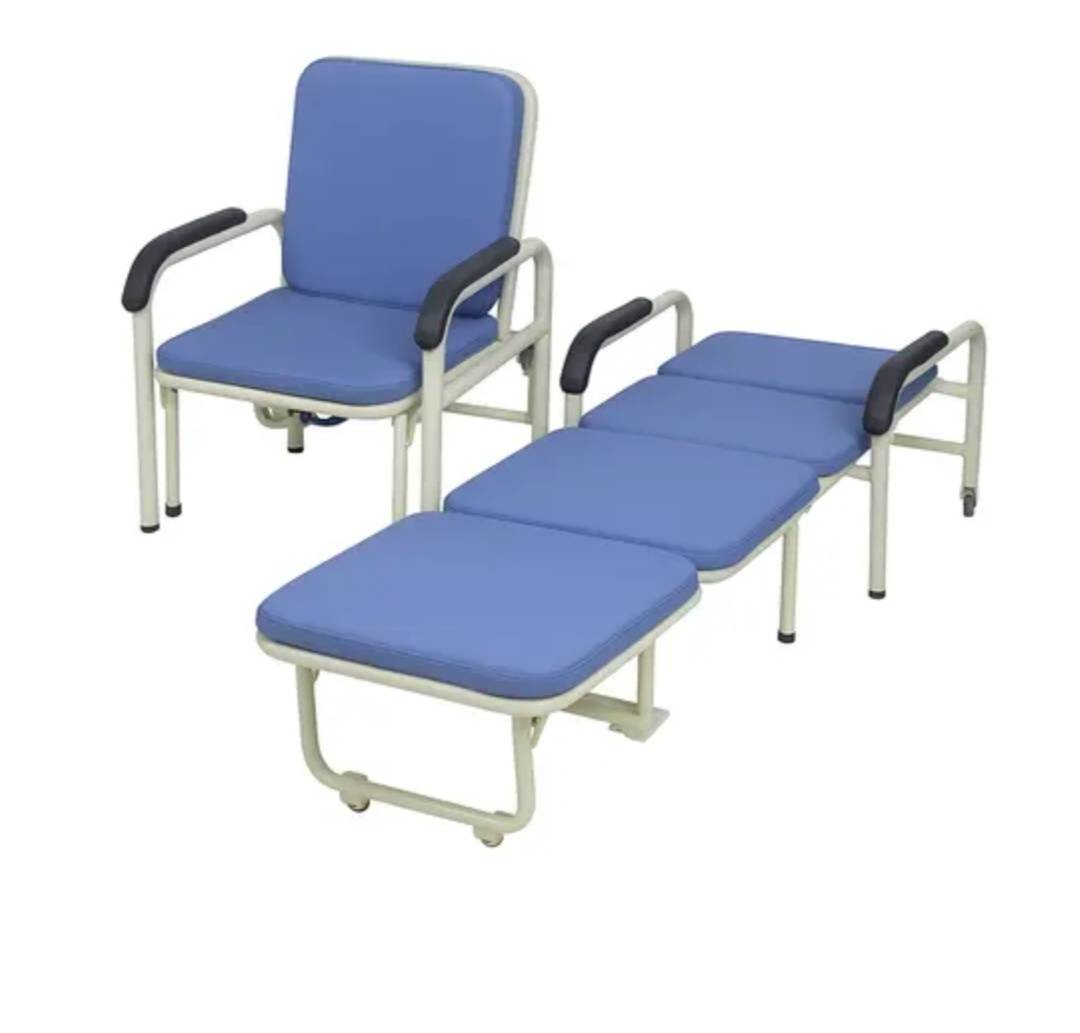 | Hospital Furniture Manufactured by Windlio International, Pune The Attendant Bed Cum Chair is a versatile and space-saving furniture solution designed to function both... View product → |