A device that looks suitable in a catalogue can fail when it cannot pass through the doorway, support the patient and accessories, connect safely to the facility, or be cleaned and serviced within the available workflow. By the end, you will have a practical method for converting clinical demand, room constraints, infrastructure, staffing and lifecycle costs into a supplier-ready equipment specification.
Key takeaways
- Define patient flow, procedures and failure risks before comparing equipment.
- Turn each clinical task into measurable capacity, dimensions and safety specifications.
- Confirm room clearances, power, plumbing, data connections and equipment access.
- Price installation, maintenance, training, spare parts and downtime—not only purchase cost.
Start with the facility’s service, patients and workflow
Begin with the service the facility delivers, not a catalogue of available equipment. A facility needs assessment should show who receives care, which procedures occur, how staff move patients and supplies, and what failure would disrupt treatment.
1. Define the service and patient profile. Record outpatient, inpatient, diagnostic, surgical, emergency, intensive-care or long-term-care activity; patient volume; acuity; mobility needs; body-size range; and case mix. A nursing home may prioritise transfers, pressure-injury prevention and bathing, while an operating theatre prioritises positioning, sterility and rapid turnover.
2. Measure demand. Capture procedure volume by day and shift, referral patterns, average occupancy, seasonal changes and peak demand. Size equipment for the busiest credible period, not the monthly average. An emergency department that buys for average arrivals will create queues when several unstable patients arrive together.
3. Trace the workflow. Observe registration, assessment, treatment, transfer, cleaning, storage and discharge. Note how many staff handle each task, where equipment waits, which doors and lifts it passes through, and which existing assets it must work alongside.
4. Record constraints and consequences. List current equipment, consumables, storage capacity, staffing skill, maintenance access and downtime impact. A small clinic may need one versatile device with local repair support; an ICU may need redundancy because one unavailable unit can delay life-sustaining care.
Use these findings to write a needs statement before comparing brands: service, users, workload, operating environment, essential functions and the consequence of choosing too little capacity. Only then should product specifications enter the discussion.
Convert clinical tasks into measurable equipment specifications
Turn each clinical task into a pass/fail specification, not a preference such as “comfortable” or “easy to move.” Observe the patient transfer, procedure position, staff reach, and cleaning routine, then record the measurement, range, load, interface, or test that proves the equipment supports it.
- Calculate safe working load from the complete rated load: maximum patient weight plus mattress, pump, monitor, oxygen cylinder, accessories, staff leaning force, and movement. Do not treat maximum patient weight as the equipment’s total capacity.
- Specify the height range needed for patient transfer, wound care, examination, and staff ergonomics; include the lowest transfer height and highest working height.
- Record the required backrest and tilt range in degrees, alongside leg-rest movement, Trendelenburg capability, and the control location.
- Add castor diameter, braking arrangement, turning space, side-rail operation, mattress dimensions, shelf load rating, drawer configuration, and the cleaning chemicals the surfaces must tolerate.
- Define the proof required at acceptance: a representative load test, brake test, alarm check, adjustment-cycle test, and transfer demonstration with the actual staff who will use it.
| Clinical task | Comparable specification | Failure avoided |
|---|---|---|
| Patient transfer | Minimum height, castor size, brake type, and clearance under the frame | Falls, collisions, and unsafe lifting |
| Examination or procedure | Height range, backrest angle, tilt range, mattress width, and accessory capacity | Poor positioning or restricted access |
| Monitoring and treatment | Safe working load, maximum patient weight, rail configuration, oxygen and pump mounting points | Overload, equipment displacement, or blocked access |
| Cleaning and turnaround | Seamless surfaces, removable parts, chemical compatibility, and cycle time | Cross-contamination and delayed room use |
Prove the equipment will fit the room and connect safely
A room drawing and delivery route—not the catalogue footprint—prove that equipment will fit and function safely. Verify these points before issuing the purchase order:
1. Measure the packaged and assembled equipment against doorway width, corridor turning radius, lift clearance, ceiling height and lift capacity. Mark operating, patient-transfer and maintenance clearances on the room drawing, then check floor loading, wall reinforcement, storage space and the route for future replacement.
2. Confirm electrical compatibility with the facility electrician and biomedical engineer. Match voltage, phase, frequency, current, plug type and circuit capacity, then verify protective earthing, equipotential bonding, isolation, emergency power and UPS capacity. IEC 60601-1 addresses the equipment; it does not prove that the building installation is adequate.
3. Record every required gas connection: oxygen, medical air, nitrous oxide or vacuum. Match outlet standards, gas identity, pressure, flow, vacuum performance, connector type, hose reach and shut-off access to the facility installation. Test for leaks and incorrect connections during site acceptance.
4. Obtain the cleaning method in writing. Check casters, joints, upholstery seams, mattress interfaces, control panels, cable routes and undersides against approved detergents, disinfectants, contact times and cleaning equipment. A surface that traps soil or cannot tolerate the facility’s disinfectant creates avoidable infection-control risk.
5. Put delivery inspection, installation qualification, electrical and gas-safety checks, calibration, alarm and interface testing, representative-load performance tests, training and stakeholder sign-off into the purchase specification. Include clinical, facilities, biomedical, infection-control and IT reviewers as applicable.
Compare adjustment systems, digital features and lifetime operating cost
Choose manual, hydraulic, electric or electro-hydraulic adjustment by failure consequence and service capability, not purchase price. A simple mechanism can outperform powered equipment where cleaning, battery charging and specialist repairs are difficult.
| Option | Service and failure profile | Choose it when |
|---|---|---|
| Manual | Few components, no battery; adjustment depends on staff effort | Use in low-acuity rooms with infrequent repositioning |
| Hydraulic | Foot-pump operation; leaks require seal or cylinder repair | Use where smooth height adjustment matters but electricity is limited |
| Electric | Motorised movement; depends on battery, controls and mains power | Use for frequent positioning or reduced staff lifting |
| Electro-hydraulic | Powered controls drive hydraulic movement; more complex servicing | Use when high load, precise movement and frequent adjustment justify complexity |
For each option, record the safe failure mode: does it remain at working height, descend slowly, or become immobile? Specify battery backup, charging time, replacement interval, spare-part availability and the technician’s required skills. Ask for preventive-maintenance intervals and expected repair downtime.
Treat digital features as procurement requirements, not bonuses. Define supported operating systems, patch policy, authentication, role-based access, encryption, audit logs, remote-service controls, vulnerability disclosure and end-of-life support. For interoperability, name each data flow, identifier, destination, time source and failure response; require DICOM or HL7/FHIR where applicable.
Calculate total cost of ownership over the planned life: installation, training, calibration, licences, batteries, filters, accessories, service travel, downtime, decommissioning and disposal. When assessing a trolley, Windlio International can be asked to document socket load, cable routing, wheel-brake testing and cleaning access rather than merely shelf capacity.
Related products
 | Hospital Furniture Equipment Trolley with Power Socket Panel – Multi Shelf Medical Monitor Cart on Wheels Multi-purpose hospital equipment trolley specially designed for ICU, OT, and critical care areas to safely hold monitors, ventilators, infusion... View product → |
 | Hospital Furniture Stainless Steel Hospital Storage Rack · 4 Tier Medical Equipment Shelving Unit High-quality stainless steel hospital storage rack designed for safe and hygienic storage of medical supplies, instruments, linens, and equipment. View product → |
Make installation, acceptance and supplier support part of the specification
Put acceptance criteria in the purchase order, not in the delivery conversation. A factory test does not prove safe operation in your rooms, on your electrical system, or with your medical-gas pipeline.
Your acceptance testing checklist should require:
- Delivery inspection for damage, correct accessories, serial numbers, labels and manuals
- Installation qualification covering anchoring, clearances, earthing, equipotential bonding and emergency-power connections
- Electrical and gas-safety checks against the facility’s national code, outlet type, pipeline pressure, gas identity, flow and simultaneous demand
- Calibration certificates and verification of alarms, software, network interfaces and data exchange
- Performance tests using representative patients, loads, procedures and cleaning processes
- Training for operators, biomedical staff, facilities staff and infection-control personnel
- Written sign-off from clinical, biomedical, facilities, infection-control and IT stakeholders, as applicable
Confirm the destination country’s regulatory approval, registration, importer or authorised-representative rules, language and labelling requirements, and post-market reporting duties. IEC 60601-1 evidence covers the equipment; it does not prove adequate room wiring, UPS capacity, isolation or electromagnetic compatibility.
Make supplier support measurable. Specify uptime, response and restoration times, preventive maintenance intervals, calibration requirements, spare-parts availability, local technical competence, remote-support limits and an end-of-life replacement plan. Compare total cost of ownership, including installation, training, licences, batteries, filters, service travel, downtime, decommissioning and disposal.
A compliant device becomes a poor choice when qualified support is several days away.
Frequently asked questions
What should you assess before selecting medical equipment?
Assess the facility’s services, patient groups, procedures, staff movements, supply routes and the treatment disruptions caused by equipment failure.
How do you turn clinical needs into equipment specifications?
Document measurable requirements such as load capacity, working height, dimensions, adjustment range, operating speed, cleaning compatibility and required safety features.
How can you check whether equipment will fit and connect safely?
Measure doorways, corridors, turning areas, room clearances and service points, then confirm electrical, plumbing, medical-gas and data requirements before ordering.
What costs should you compare beyond the purchase price?
Include delivery, installation, commissioning, staff training, preventive maintenance, consumables, spare parts, software support and downtime over the equipment’s service life.
Related products
 | Deluxe Hospital Examination Table with Storage Cabinet – Mild Steel Examination Couch Premium quality hospital examination table designed for clinics, hospitals, and diagnostic centers. View product → |
 | Hospital Furniture Hospital Examination Table with Storage Cabinet – Mild Steel Patient Examination Couch Product Description Durable and comfortable hospital examination table designed for patient check-ups, dressing, and clinical procedures. View product → |
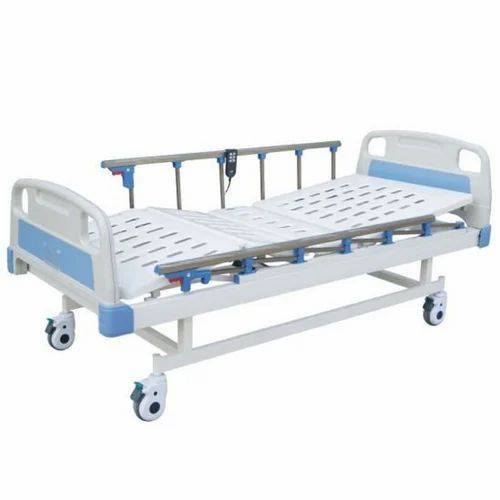 | Hospital Furniture Manufactured by Windlio International, Pune The Electric Hospital Bed by Windlio International is designed to provide enhanced comfort, safety, and... View product → |
 | Monitor Trolley MS 3 Shelves ECG Machine Trolley Manufactured by Windlio International, Pune The MS 3 Shelves ECG Machine Trolley is a high-quality, hospital-grade equipment transportation cart... View product → |