A trolley built for monitors is not automatically suitable for medicines, sterile instruments, contaminated returns, linen or patient transfer. By matching each trolley to its workflow, route, load, cleaning method and security needs, you can avoid unsafe substitutions and specify equipment that staff can use efficiently across wards, theatres, laboratories and support departments.
Key takeaways
- Choose trolleys by workflow, location and required patient support.
- Match trolley dimensions and casters to routes, loads and turning space.
- Separate clean, sterile, contaminated and patient-transfer workflows.
- Specify brakes, locks, power management and accessories for the task.
Which hospital trolley types belong in each healthcare area?
Choose hospital trolley types by workflow and location, not by a stainless-steel finish. A general-purpose trolley lacks the access control, containment, braking, layout or patient-support features that specialised work requires.
| Type | Primary locations | Main job |
|---|---|---|
| Dressing trolley | Wards, treatment rooms, outpatient areas | Carries dressings, antiseptics and procedure supplies. |
| Medicine trolley; pharmacy cart | Wards, medication rooms, pharmacy | Secures, separates and transports medicines. |
| Emergency cart; crash cart | Emergency department, ICU, operating room, recovery room | Keeps resuscitation equipment and drugs ready for rapid access. |
| Instrument trolley; anaesthesia trolley | Operating room, procedure suites, CSSD | Supports sterile instruments, airway supplies and anaesthesia equipment. |
| Linen trolley; food trolley | Patient room, wards, housekeeping routes | Moves clean linen, meals and soiled textiles in separate workflows. |
| Utility trolley; waste trolley | Wards, laboratory, housekeeping routes | Carries cleaning supplies or contained waste without mixing routes. |
| Patient-transfer trolley | Wards, radiology, emergency department, recovery room | Moves patients with brakes, side rails and support accessories. |
| Computer workstation cart | Clinical areas, wards, ICU, laboratory, pharmacy | Supports a computer, scanner, records and charging equipment. |
A pharmacy cart needs controlled access, while a waste trolley needs containment; neither is interchangeable with a utility trolley. A patient-transfer trolley also has patient-safety requirements that a supply cart cannot meet. Separate clean and contaminated instrument routes in CSSD rather than relying on wiping one general trolley between trips.
How do equipment, monitor, ECG, instrument and emergency trolleys differ?
An equipment trolley carries several clinical devices and accessories; a monitor trolley is built around moving and positioning one monitor. The equipment trolley versus monitor trolley decision depends on whether you need mixed-device capacity or stable screen placement.
| Type | Main workflow | Distinguishing features |
|---|---|---|
| Equipment trolley | Move several devices and accessories | Shelves, cable management and a payload suited to mixed equipment |
| Monitor trolley | Position a patient monitor | Stable platform, adjustable height, brakeable castors and cable routing |
| ECG trolley | Record and prepare an ECG | Space for the ECG unit, leads, electrodes, paper and a writing surface |
| Instrument trolley | Support a procedure | Clean setup area, controlled handling and easy disinfection |
| Anaesthesia trolley | Support anaesthesia at the workstation | Organised airway supplies, breathing equipment, drugs and monitoring items |
| Emergency cart | Deliver immediate resuscitation | Standardised drawers, rapid access and readiness controls |
An emergency cart, also called a crash cart, follows a defined crash cart workflow rather than ordinary storage. Specify the following controls:
- Standard drawer layout and a current contents list
- Tamper-evident seal, with documented opening and replacement
- Defibrillator and oxygen holder where required
- Battery, electrode and airway supplies checks
- Expiry-date checks and documented replenishment frequency
A medication trolley needs locking drawers, authorised access and drawer segregation. Keep controlled substances in the approved compartment, log access and reconcile stock against the facility’s controlled-substance audit requirements.
Which trolleys protect clean, sterile, contaminated and patient-transfer workflows?
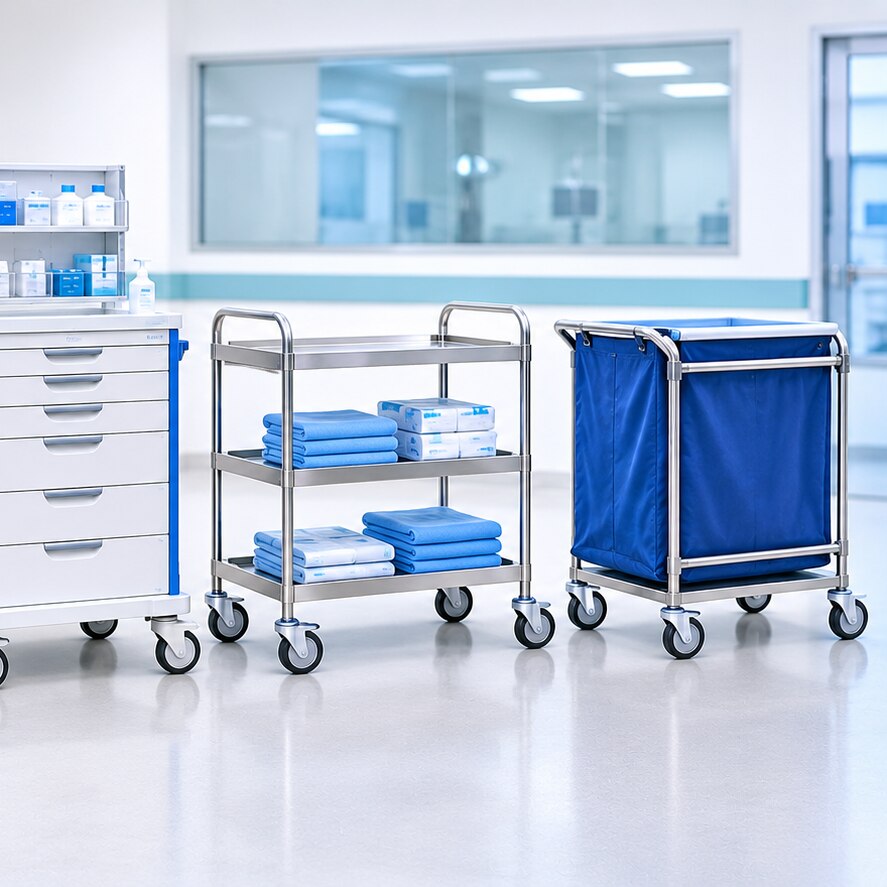
A CSSD trolley or sterile instrument case cart protects processed packs during transport to the operating room, but it does not replace sterilization containers or sterile storage controls. Keep it closed or covered, cleanable inside, protected from impact and separate from dirty traffic.
| Workflow | Suitable trolley or container | Required control |
|---|---|---|
| CSSD and operating room | Sterile instrument case cart | Covered transport; protected sterile storage |
| Instrument return | Contaminated instrument return cart | Visible dirty route and written cleaning instructions |
| Endoscopy | Endoscope transport cart with closed container | Labelled, leak-resistant container; separate clean dirty workflow |
| Laundry | Soiled linen trolley or covered linen cart | Bag soiled textiles at the point of use; prevent leakage |
| Waste service | Regulated medical waste cart | Transport containers, not replace them |
Used flexible endoscopes must travel in a closed, labelled, leak-resistant container. An open-shelf trolley is unsuitable, even when it manoeuvres well. Regulated medical waste containers must be closable, leak-resistant and able to contain their contents; an open cart alone does not meet that requirement.
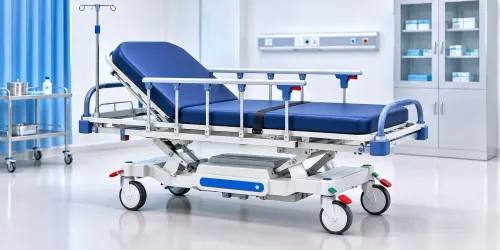
For a patient-transfer trolley, check the safe working load against the patient, mattress, oxygen cylinder, monitor, IV equipment and transfer forces. Verify side rails, brakes, backrest, mattress, height range and accessory mounts before purchase.
A bariatric trolley also requires route checks: measure doorways, lifts, corners, thresholds and turning space, then confirm floor loading and emergency access. A high rating does not prove suitability for lateral transfer or bariatric transport.
How should you size a trolley for its route, load and working space?
Measure the complete route before selecting hospital trolley dimensions: doorway clearance, lift clearance, bedside access, corridor corners, ramps and thresholds. Record usable width, depth, height and turning radius, including the space needed for handles, side rails or oxygen holders. A bariatric trolley needs the same check from bed space to imaging, theatre and recovery.
Set shelf spacing from the tallest item, not the maximum shelf count. Choose a working height that keeps the procedure near elbow level; a low surface forces bending, while an excessive height obstructs visibility. Calculate payload from the full working load:
- Devices, supplies, monitors and batteries
- Oxygen cylinders, mattresses and accessories
- Patient weight, where applicable
- Transfer forces and movement over ramps or thresholds
Specify safe working load above that total, then test the loaded trolley on its actual route. Unloaded showroom performance proves little.
| Material | Strength and exposure | Check before selection |
|---|---|---|
| Painted mild steel | Cost-effective for dry areas | Confirm coating integrity and corrosion resistance after disinfectant cleaning |
| Stainless steel | Better for wet areas and frequent washing | Confirm grade, finish and disinfectant compatibility |
Demand welded or sealed joints, non-absorbent surfaces, few crevices, removable accessories and accessible wheel assemblies. These details prevent trapped fluid and simplify cleaning.
Swivel castors improve manoeuvring; fixed castors improve directional tracking. Add total-lock brakes, select wheel materials that protect the floor, and verify wheel diameter against thresholds, ramps and floor protection. Larger wheels cross thresholds better but increase height and turning radius. A loaded-route trial exposes failures that specifications hide.
Which security, electrical and accessory features should you specify?
Specify medication cart security before finish or colour: use locking drawers or electronic access, a tamper-resistant medication compartment, tamper-resistant compartments for controlled stock, and access logging where pharmacy policy requires it. Separate controlled substances from routine medicines, and confirm that the lock system supports audit review.
Workstation cart | Medicine cart Purpose | Device access, documentation and communication | Secure medicine storage and distribution Specify | Battery runtime, charging method, screen position, barcode scanner and network equipment | Locking drawers, drawer segregation, electronic access and access logging Main risk | Added weight, cable clutter and difficult disinfection | Unauthorised access, poor stock control and incomplete audit trails
Add accessories only when the route and procedure demand them:
- Choose a defibrillator platform for a crash or resuscitation workflow, an oxygen-cylinder holder for oxygen transport, an IV-pole attachment for infusion use, and side rails where equipment could slide during movement.
- Fit waste bins to the waste stream and working method, not as decoration. Apply local waste colour coding, labels, symbols, bag colours and routes because colours do not have universal meanings.
- On a power-socket panel, verify socket count, voltage, current rating, earthing, overload protection, plug compatibility and cable routing. Keep mains cables separate from patient lines, and require documented electrical safety checks for every connected monitor and ventilator.
Ask Windlio International to assess a trolley specification against your written route, load, cleaning, security and electrical requirements rather than its appearance.
Related products
 | Hospital Furniture Equipment Trolley with Power Socket Panel – Multi Shelf Medical Monitor Cart on Wheels Multi-purpose hospital equipment trolley specially designed for ICU, OT, and critical care areas to safely hold monitors, ventilators, infusion... View product → |
 | Monitor Trolley Manufactured by Windlio International, Pune The MS 5 Shelves Monitor Trolley is a multi-functional medical equipment cart crafted from high-quality... View product → |
Frequently asked questions
Which hospital trolley types belong in each healthcare area?
Use equipment and monitor trolleys where clinical devices need mobility, ECG trolleys near diagnostic work, instrument trolleys in procedure areas, and emergency trolleys where rapid resuscitation access is required.
How do equipment, monitor, ECG, instrument and emergency trolleys differ?
Equipment trolleys carry devices, monitor trolleys support bedside monitoring, ECG trolleys organise electrocardiography equipment, instrument trolleys hold procedure supplies, and emergency trolleys prioritise immediate access to resuscitation equipment.
Which trolleys protect clean, sterile, contaminated and patient-transfer workflows?
Choose enclosed, cleanable storage for clean supplies, protected compartments for sterile packs, dedicated containment for contaminated items, and patient-support features for transfer trolleys.
How should you size a trolley for its route, load and working space?
Measure doorways, lifts, corridors, turning areas and storage points, then select dimensions, wheel design and load capacity that fit the route without obstructing care.
Which security, electrical and accessory features should you specify?
Specify locks or seals for restricted supplies, medical-grade power management for devices, reliable brakes, cable control, push handles and accessories that match the clinical workflow.
Related products
 | Monitor Trolley Manufactured by Windlio International, Pune The MS Monitor Trolley by Windlio International is a highly durable and versatile equipment trolley... View product → |
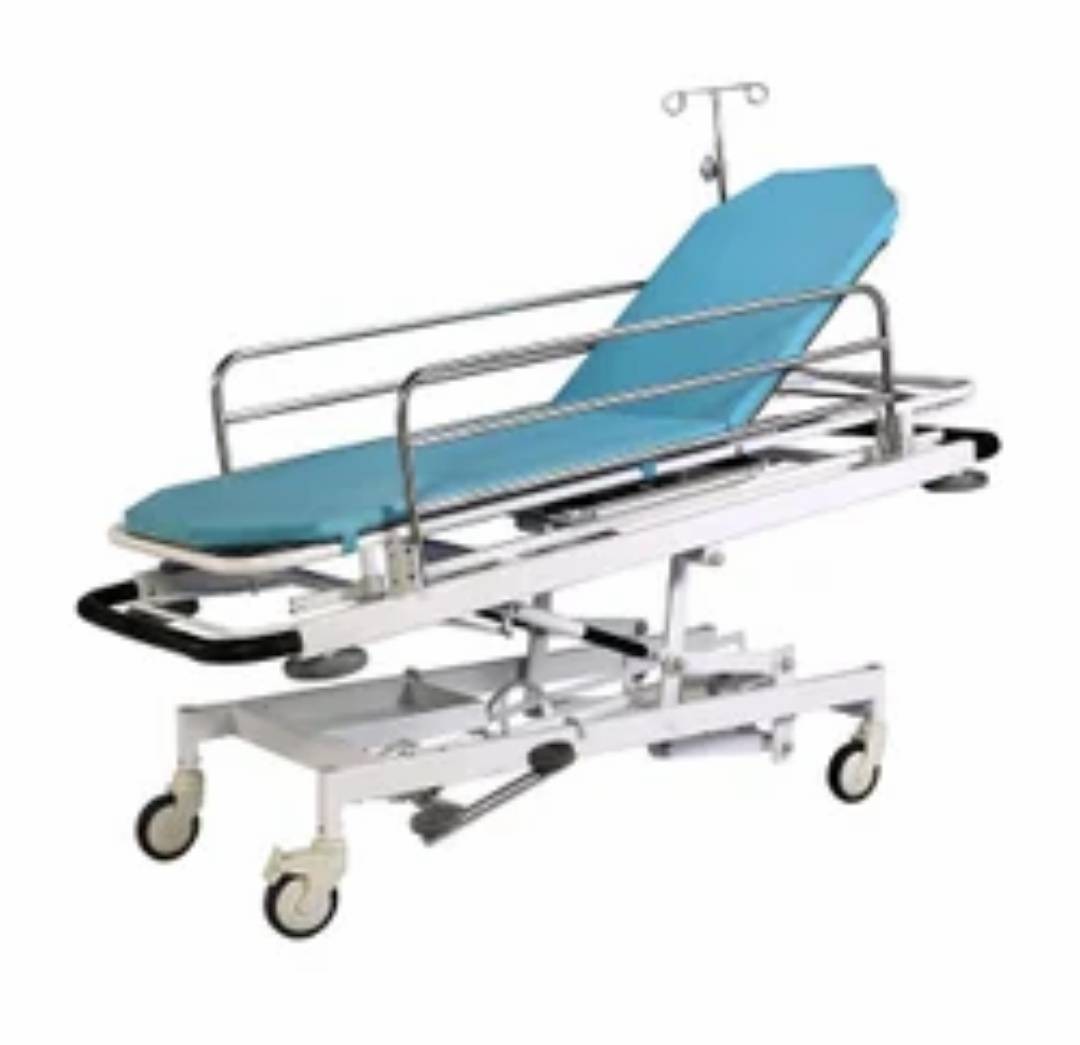 | Stretcher Trolley Hydraulic Patient Stretcher Trolley Manufacturer in Pune By Windlio International Windlio International is a leading manufacturer of hydraulic patient stretcher trolleys in Pune,... View product → |
 | Hospital Furniture Stainless Steel IV Stand / Saline Stand with Castor Wheels – Adjustable Hospital Drip Stand (4 Hook Here’s a professional IndiaMART product listing for the shown product (Hospital IV Stand / Saline Stand – Multiple Models): Product Title Stainless... View product → |
 | Monitor Trolley MS 3 Shelves ECG Machine Trolley Manufactured by Windlio International, Pune The MS 3 Shelves ECG Machine Trolley is a high-quality, hospital-grade equipment transportation cart... View product → |