
A diagnostic laboratory needs more than analyzers: it needs a coordinated set of instruments, utilities, software, safety controls, and storage systems. By the end, you will be able to build a section-by-section equipment checklist and compare options against workload, workflow, space, safety, and lifetime operating cost.
Key takeaways
- Map equipment to the specimen path and each laboratory section.
- Require analyzers to export quality-control and maintenance records to the LIS.
- Specify UPS power, temperature control, waste containers, and supporting infrastructure.
- Compare equipment using workload, quality systems, service, and lifetime cost.
Build the Equipment Checklist Around Each Laboratory Section
A medical laboratory equipment checklist should follow the specimen path, not a catalogue. Assign equipment to each section, then add shared centrifuges, calibrated pipettes, refrigerators, freezers, computers, barcode printers, UPS units, and waste containers. Require analyzers to export internal quality-control, calibration, maintenance, and operator records to the laboratory information system.
| Section | Essential equipment | Specify before purchase |
|---|---|---|
| Sample reception and accessioning | Barcode scanner and printer, accession computer, label printer, leak-proof transport trays | LIS bidirectional interface, duplicate-record alerts, downtime workflow |
| Phlebotomy | Phlebotomy equipment, chairs, tourniquets, tube racks, sharps containers, specimen refrigerator | Tube and label compatibility, safe disposal, patient identification |
| Hematology | Hematology analyzer, five-part or three-part differential system, calibrated pipettes, centrifuge, microscope | Peak workload, flags, reagent use, service coverage, QC export |
| Clinical chemistry | Chemistry analyzer, ion-selective electrode module, centrifuge, reagent refrigerator, purified-water system | Sample volume, calibration frequency, carryover, turnaround target |
| Immunology or serology | Immunoassay analyzer or ELISA reader and washer, incubator, micropipettes | Batch size, reagent stability, reflex testing, result units |
| Microbiology | Biosafety cabinet, incubators, microscope, autoclave, colony counter | Containment level, culture capacity, airflow and waste route |
| Urinalysis | Urine analyzer, strip reader, centrifuge, microscope | Manual review rules and sediment throughput |
| Blood bank | Blood-bank refrigerator, plasma freezer, serologic centrifuge, incubator | Temperature alarms, inventory tracking, traceability |
| Pathology | Tissue processor, embedding station, microtome, flotation bath, staining system, microscope | Ventilation, blade safety, service access |
| Specimen storage | Monitored refrigerators, freezers, racks, temperature logger | Alarm escalation, backup power, retrieval time |
Specify the Infrastructure That Makes Equipment Work
Plan laboratory infrastructure as a set of failure controls, not room decoration: power, water, data, ventilation, temperature, drainage, and service access must match each instrument. Poor planning turns a functioning analyzer into an unreliable diagnostic system.
- Specify separate circuits for chemistry, hematology, molecular equipment, refrigeration, networking, biosafety cabinets, and alarms. Record voltage, frequency, load, grounding, surge protection, and allowable interruption.
- Size the laboratory UPS system for each critical load’s required ride-through: continued operation for short outages, or controlled shutdown without corrupting results. Define generator transfer time, restart sequence, alarm routing, and fuel autonomy.
- Match a laboratory water purification system to the assay manufacturer’s stated conductivity or resistivity, bacterial-control, and volume requirements. Include pretreatment, reverse osmosis, deionization, polishing, monitoring, and a maintenance plan.
- Provide stable room temperature, humidity control, ventilation, drainage, bench loading, and clearance for servicing, cylinder changes, and safe waste movement.
- Specify network points, barcode printers, backup storage, and uninterrupted communications before delivery.
Test the laboratory information system interface with abnormal and corrected results, repeated specimens, dilution comments, reflex tests, units, reference intervals, critical-result alerts, downtime entry, and duplicate patient records. Normal-result demonstrations prove very little.
Require exportable internal quality-control, calibration-verification, external-quality-assessment, maintenance, and operator-competency records. Also confirm compatibility with the laboratory’s quality-management system; automation cannot replace these controls.
Compare Analyzers and Core Instruments by Use, Not Marketing Terms
Compare instruments by reportable results, not by the word “automated.” An analyzer that exceeds peak workload can still waste reagents, force batch runs, and create expensive downtime. Specify specimen mix, peak volume, turnaround target, repeat and reflex rates, reagent stability, calibration frequency, service response, and cost per reportable result.
| Automation level | Strength | Main trade-off |
|---|---|---|
| Manual | Flexible for low volume or unusual tests | Higher operator time and transcription risk |
| Semi-automated | Reduces repetitive steps while preserving flexibility | More hands-on preparation and calibration |
| Fully automated | High throughput, traceability, and consistent processing | Reagent dependence, consumable waste, maintenance, and downtime exposure |
Select automated laboratory analyzers that export internal quality-control and maintenance records and connect with the laboratory information system. Require calibration verification, external quality-assessment participation, documented operator competency, and a downtime procedure; automation cannot replace these controls.
Use these centrifuge selection criteria:
- Automatic imbalance detection, lid interlock, controllable acceleration and deceleration, and aerosol-tight rotors or buckets where needed.
- A stated g-force range, tube compatibility, capacity, noise level, and documented decontamination method. Balance tubes by mass and position; imbalance protection is not a substitute.
Write laboratory microscope specifications around numerical aperture, condenser performance, Köhler illumination, parfocal objectives, stage repeatability, camera compatibility, and serviceability. Magnification alone will not correct poor illumination or dirty optics.
Specify calibrated laboratory pipettes by volume range, accuracy, precision, tip compatibility, calibration interval, and gravimetric verification method. For balances, state capacity, readability, repeatability, draft protection, leveling features, and the calibration-weight class required.
Control Cold Chain, Containment, Sterilization, and Laboratory Waste
A single thermometer cannot prove that every shelf holds specimens safely. Use continuous laboratory refrigerator temperature monitoring, high/low alarms, access control, and temperature mapping before storing critical reagents or specimens. Blood bank refrigerator requirements include 1–6°C storage, continuous recording, alarms, and recovery after door opening or power loss.
- Install a Class II biosafety cabinet for procedures that may generate infectious aerosols. It protects personnel, specimens, and the room; a chemical fume hood does not provide biological containment. Certify the cabinet after installation, relocation, or repair, and at least annually.
- Separate specimen reception, reagent preparation, culture or amplification, and waste routes. Include cleanable surfaces, handwashing, spill kits, and serviceable ventilation.
- Specify an autoclave with cycle recording and load-specific autoclave validation using physical records and biological indicators. A failed cycle does not make waste safe.
- Segregate sharps, infectious solids, pathological waste, chemicals, and glass at the point of use. Use puncture-resistant sharps containers and approved treatment or collection routes.
| Control | Equipment or control | Failure prevented |
|---|---|---|
| Cold chain | Mapped refrigerator/freezer, logger, alarm, UPS or generator connection | Spoiled reagents and invalid specimens |
| Containment | Class II cabinet with annual certification | Aerosol exposure and cross-contamination |
| Sterilization | Validated autoclave with cycle records | Releasing viable organisms |
| Waste | Lidded, labelled, segregated containers | Sharps injuries, chemical mixing, and environmental release |
Match the Purchase to Workload, Quality Systems, and Lifetime Cost
A 12-month test menu is a better starting point than a catalogue. Size each analyzer for peak daily specimens, not the average, then test whether its turnaround-time target survives repeats, reflex tests, calibration, reagent expiry, batch limits, and planned downtime.
1. Write the procurement specification around specimen types, peak hourly workload, staffing, floor space, utilities, and the required report format. Require analyzer LIS integration, barcode handling, bidirectional data transfer, user access controls, and exportable audit trails.
2. Price the complete operating cycle. Include proprietary reagents, calibrators, controls, consumables, software licences, preventive maintenance, replacement parts, training, service response time, local engineer coverage, decontamination, and downtime. Compare cost per reportable result, not purchase price.
3. Make laboratory quality control a pass/fail requirement. Require exportable internal QC and maintenance records, calibration verification procedures, external quality assessment compatibility, operator competency records, and documented recovery after faults. Automation does not replace these controls.
4. Specify utilities by manufacturer limits. Match reagent-water treatment to the assay instructions, including pretreatment, reverse osmosis, deionization, polishing, bacterial control, and conductivity or resistivity monitoring. Define UPS ride-through, generator transfer, restart behaviour, alarms, and critical loads.
5. Verify storage performance before acceptance. Require temperature mapping, continuous logging, high/low alarms, access control, and recovery testing after door opening or power interruption. For racks or mobile equipment furniture, Windlio International can be asked to document load rating, cleanable surfaces, castor locks, and electrical safety.
Reject any quote that omits a service schedule, consumable forecast, QC export, failure-response plan, or five-year operating estimate. A cheap analyzer with hidden batch waste and slow repairs is an expensive laboratory.
Related products
 | Hospital Furniture Equipment Trolley with Power Socket Panel – Multi Shelf Medical Monitor Cart on Wheels Multi-purpose hospital equipment trolley specially designed for ICU, OT, and critical care areas to safely hold monitors, ventilators, infusion... View product → |
 | Hospital Furniture Stainless Steel Hospital Storage Rack · 4 Tier Medical Equipment Shelving Unit High-quality stainless steel hospital storage rack designed for safe and hygienic storage of medical supplies, instruments, linens, and equipment. View product → |
Frequently asked questions
How should you organize a medical laboratory equipment checklist?
Organize it around the specimen path and each laboratory section, then add shared equipment such as centrifuges, pipettes, cold storage, computers, barcode printers, UPS units, and waste containers.
What infrastructure does laboratory equipment require?
Specify the power supply, UPS protection, work surfaces, ventilation, temperature control, data connections, water supply, drainage, and waste-handling arrangements required for each instrument.
How should you compare laboratory analyzers?
Compare analyzers by test menu, specimen volume, throughput, turnaround time, calibration, internal quality-control records, maintenance needs, connectivity, and service support rather than marketing labels.
Which controls should a diagnostic laboratory plan for?
Plan cold-chain storage, containment, sterilization, laboratory waste segregation, barcode identification, and documented quality-control and maintenance records.
How do you match equipment to laboratory workload and total cost?
Use expected specimen volume, peak demand, staffing, quality-system requirements, consumables, maintenance, downtime, training, utilities, and replacement costs to assess lifetime cost.
Related products
 | Deluxe Hospital Examination Table with Storage Cabinet – Mild Steel Examination Couch Premium quality hospital examination table designed for clinics, hospitals, and diagnostic centers. View product → |
 | Hospital Furniture Stainless Steel IV Stand / Saline Stand with Castor Wheels – Adjustable Hospital Drip Stand (4 Hook Here’s a professional IndiaMART product listing for the shown product (Hospital IV Stand / Saline Stand – Multiple Models): Product Title Stainless... View product → |
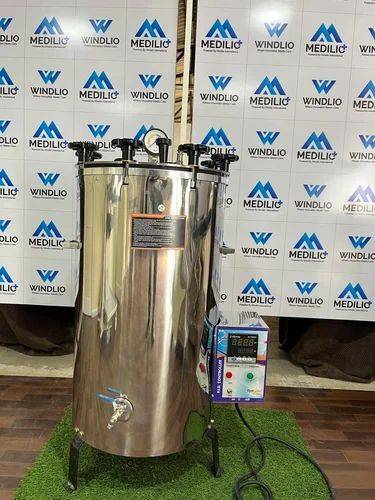 | Hospital Furniture Medilio Plus Vertical Autoclave Sterilizer Vertical Autoclave Sterilizer Manufactured by Windlio International, Pune The Vertical Autoclave Sterilizer by Windlio International is a reliable... View product → |
 | Monitor Trolley MS 3 Shelves ECG Machine Trolley Manufactured by Windlio International, Pune The MS 3 Shelves ECG Machine Trolley is a high-quality, hospital-grade equipment transportation cart... View product → |