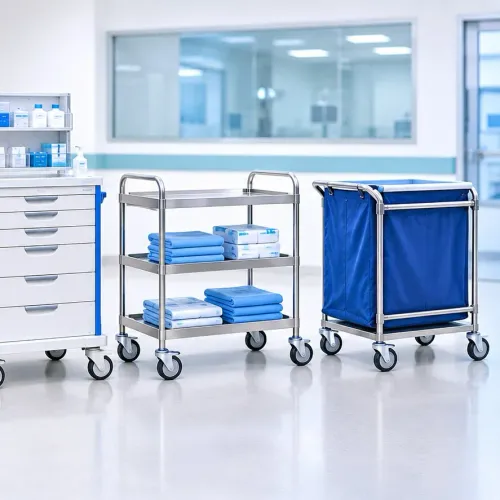
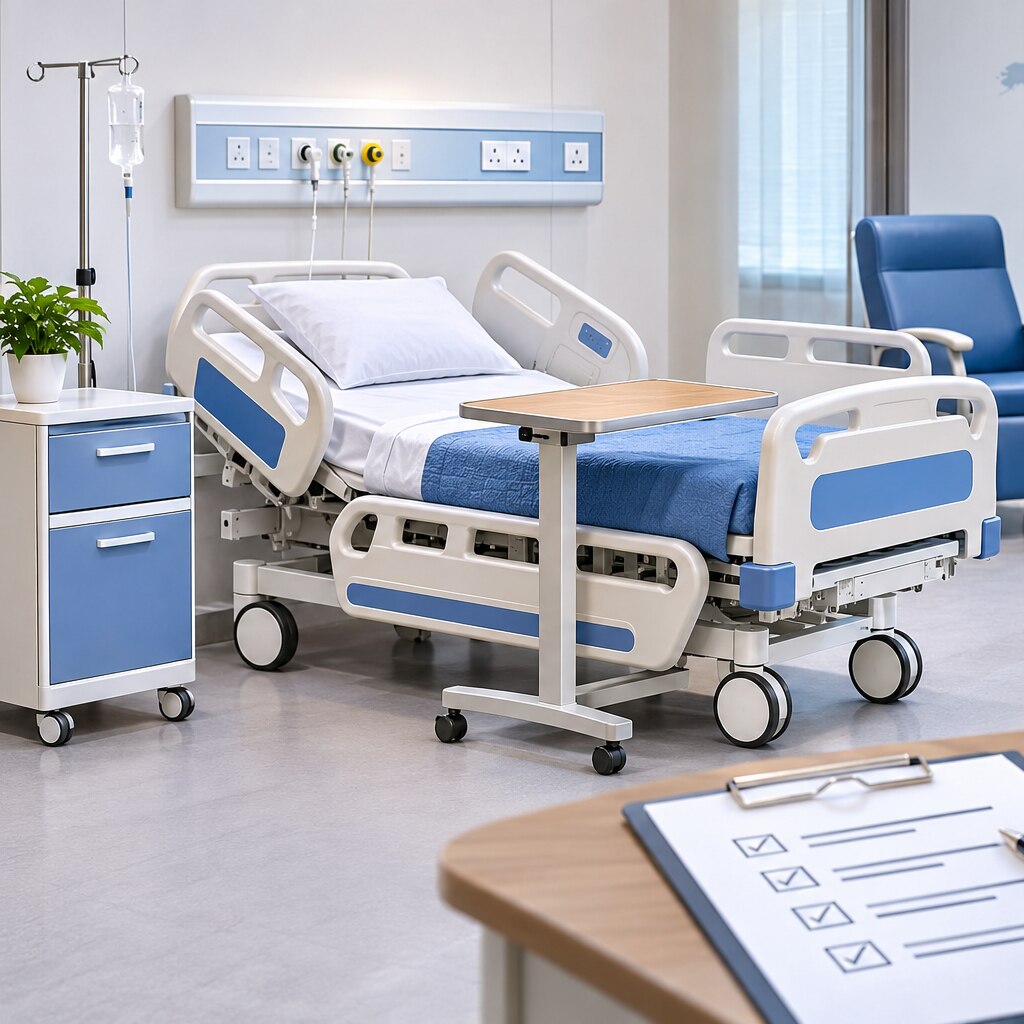
A low quotation can conceal incompatible dimensions, weak documentation, expensive freight, difficult cleaning, or months of service downtime. By the end, you will have a product-by-product method for defining specifications, checking compliance evidence, comparing landed cost, approving samples, and deciding when a quoted design is the wrong fit.
Key takeaways
- Define the clinical task, users, location, and procedure before comparing quotations.
- Replace claims like “durable” with load ratings, materials, dimensions, and test evidence.
- Request safety documents, infection-control evidence, samples, and traceable batch information.
- Calculate landed cost alongside spare parts, maintenance, warranty, and component compatibility.
Define the clinical job before comparing products
A quotation is only comparable after you define the clinical use case: who uses the furniture, what procedure it supports, and where it will operate.
Classify each SKU by intended medical purpose and operating mode before contacting suppliers; a powered bed, patient lift, examination chair and bedside cabinet may follow different rules in the importing country.
1. Record the users and task. State whether nurses reposition patients, patients adjust controls, surgeons require a stable transfer surface, or porters move the item between wards. Include the expected replacement cycle and daily operating frequency.
2. Specify the room and workflow. Give clear door, lift and corridor widths; floor type; storage space; required mattress dimensions; working-height range; castor diameter and brake arrangement; cleaning chemicals; and whether the item must pass through imaging, isolation or operating areas.
3. Set the load requirement precisely. State the patient weight limit, mattress and accessory configuration, dynamic loading, articulation positions and required safety factor. Do not confuse safe working load versus patient weight: the safe working load may include the mattress, side rails, IV pole, oxygen cylinder and other attached equipment.
4. Define power, maintenance and legal needs. State electrical input, battery-backup duration, actuator duty, charging location, local language, registration, importer or authorised-representative details, and service response expectations. Ask each supplier to complete the same hospital furniture specification, including packed dimensions and gross weight, so later quotations compare equivalent products rather than different assumptions.
Turn product claims into measurable specifications
Replace “durable” with figures: hospital bed dimensions, safe working load, frame-gauge or material grade, weld construction, mattress-platform design, and the working-height range. Request the adjustment speed, actuator rating, battery-backup duration, voltage, frequency, plug type, and protective-earth arrangement for powered models.
Compare mild steel versus stainless steel, aluminium and polymer furniture against the actual cleaning and mobility demands:
| Material | Strengths | Risks to check |
|---|---|---|
| Mild steel | High rigidity and lower cost | Rust at scratches, welds and unsealed tube ends; require coating thickness and corrosion-test evidence |
| Stainless steel | Strong corrosion resistance and robust cleaning performance | Grade matters; request 304 or 316 specification, weld finishing and passivation records |
| Aluminium | Lower weight and easier handling | Denting, joint fatigue and galvanic corrosion where it contacts other metals |
| Polymer | Seamless surfaces and low corrosion risk | Cracking, swelling or brittleness after disinfectant exposure; request chemical-compatibility data |
Specify caster diameter and brakes, including whether each caster locks rotation and wheel movement, or whether a central brake controls all four. Small casters struggle over thresholds and uneven floors.
Inspect seams, exposed fasteners, drainage points, cable routes, castor housings, undersides and mattress platforms. Ask for the disinfectant list tested against the hospital’s actual products; one chemical can leave a surface intact while another causes cracking, swelling, corrosion or coating loss.
Require tolerances, finish requirements and replacement-part identifiers rather than accepting “easy to clean” or “heavy duty.”
Verify regulation, safety evidence, and infection-control performance
A certificate with the wrong scope proves little. For every model, match the legal classification, manufacturer, manufacturing site, product family, and destination-market requirements before accepting a supplier’s “CE certified” claim. Request the EU Declaration of Conformity, certificate number, notified-body identity and certificate expiry where the conformity route requires a notified body.
- ISO 13485 certification scope and ISO 9001 certification scope, including covered sites, product categories and validity dates.
- An ISO 14971-based risk-management file or summary tied to the model, covering entrapment, falls, overload, unintended movement, cleaning chemicals, battery failure, electrical hazards and foreseeable misuse.
- Cleaning and disinfection instructions naming compatible chemicals, concentrations, contact times, temperatures and prohibited methods; request repeated cleaning or sterilisation-cycle evidence for instruments.
- Labels, instructions, warnings, importer or authorised-representative details, registration evidence and translations required in the destination country.
| Model or equipment | Evidence to request | Check before approval |
|---|---|---|
| Powered medical bed | IEC 60601-1 and IEC 60601-2-52 medical bed standardisation evidence | Exact model and configuration, voltage, frequency, plug, protective earth, leakage-current and EMC conditions, battery charging and safe-working load |
| Instrument or trolley | Material grade, surface finish, passivation or coating report, corrosion and cleaning-cycle results | Mixed metals, pitting, residue traps, hardness or cutting-edge performance |
| Mattress or upholstered item | Fire-test classification and disinfectant-compatibility report | Classification accepted by the destination market and no loss of integrity after cleaning |
A generic test report does not cover every SKU. Reject documents showing a different model, discontinued configuration or unauditable laboratory.
Inspect the sample and test the supply chain before shipment
Approve the shipment only after the production unit matches the signed sample and passes a route-specific trial. A showroom sample proves appearance, not resistance to container vibration, moisture, installation errors, or repeated cleaning.
1. Inspect the production sample against a dimensioned drawing. Check frame alignment, caster locks, adjustment travel, mattress platform, seams, exposed fasteners, cable routes, and underside surfaces. Record photographs, model revision, and serial or batch identification.
2. Commission a weld inspection on load-bearing joints. Look for cracks, undercut, porosity, incomplete fusion, sharp projections, and distortion; apply the stated safe working load during a witnessed functional test.
3. Test coating adhesion after cleaning with the hospital’s actual disinfectants. Inspect for blistering, swelling, corrosion, cracking, colour transfer, and loss of surface integrity. Repeat moving-part and brake tests after assembly.
4. Run a pre-shipment inspection on packed and unpacked units. Confirm carton dimensions, gross weight, pallet footprint, stacking limit, moisture barrier, corner protection, shock or vibration protection, and spare hardware. Compare the packing plan with the sea, road, rail, and transshipment route.
5. Require photographs showing the sealed load and the ISPM 15 wood packaging mark. Non-compliant crates or dunnage can trigger treatment, destruction, re-export, or charges at destination.
For Windlio International, require the approved examination couch or electric bed to carry the same model and revision identifiers on the inspection report, packing list, labels, and installation manual. Have the installer complete a signed site test covering stability, brakes, electrical functions, clearances, and cleaning access before clinical release.
Compare landed cost, serviceability, and component compatibility
A low quotation is not a low-cost purchase if bulky cartons waste container space or a failed actuator immobilises a bed for weeks.
Calculate total cost of ownership across the replacement cycle, not just the invoice: unit price, packed cubic volume, freight, insurance, duty, taxes, destination handling, installation, training, maintenance, energy, consumables, spare parts, downtime and disposal.
Request these figures for every model:
- Packed dimensions, gross weight, carton count, pallet count, stackability and container loading plan
- Prices and lead times for hospital furniture spare parts, including casters, actuators, control boxes, cables, mattresses and fasteners
- Preventive-maintenance intervals, labour rates, battery replacement cost and the expected replacement cycle
- Warranty start point, exclusions, response time, service location and after-sales service and warranty territory
Compatibility determines whether the furniture remains usable rather than merely repairable.
| Option | Check before purchase | Failure if ignored |
|---|---|---|
| Standard components | Connector type, thread, caster mount, actuator rating and replacement-part cross-reference | A locally available part does not fit |
| Proprietary components | Written availability commitment through the replacement cycle and quoted lead times | One obsolete board strands the entire unit |
| Powered equipment | Voltage, frequency, plug, protective earth, leakage-current conditions and electric bed battery backup | The bed cannot charge safely or move during an outage |
Record the serial number, lot, manufacturing date, firmware revision and battery date at receiving. Confirm that service personnel are authorised and local, and obtain commissioning tests, fault-code documents, adjustment requirements and battery instructions. Reject a saving that depends on unplanned imports or leaves no defined repair route.
Frequently asked questions
What should you define before comparing hospital furniture?
Define who uses the furniture, which clinical procedure it supports, the patient profile, and the operating environment.
How do you turn hospital furniture claims into specifications?
Request measurable details such as dimensions, safe working load, materials, adjustment range, cleaning resistance, and test methods.
Which documents and evidence should international buyers verify?
Check the product’s regulatory documentation, safety test reports, infection-control evidence, declarations, traceability records, and warranty terms.
What should you inspect before placing an international furniture order?
Inspect a representative sample, test its functions, review packaging and shipment controls, and confirm spare parts and after-sales support.