

An ICU bed is part of the treatment and monitoring system, not just a powered frame. You need to match its positions, CPR response, imaging access, load rating, line clearance, controls, and cleaning requirements to the patients and equipment in your unit. By the end, you will have a practical specification and bedside acceptance checklist.
Key takeaways
- Confirm what each numbered bed function actually controls.
- Check CPR release, imaging access, and monitor clearance at the bedside.
- Match safe working load, mattress dimensions, rails, and movement space.
- Test alarms, controls, brakes, cleaning, and emergency access before acceptance.
What the Three, Four, and Five Bed Functions Actually Control
Three, four, and five ICU bed functions describe powered movement axes, not quality levels. The usual three are backrest adjustment, knee-rest adjustment, and deck height; a fourth adds Trendelenburg, and a fifth adds reverse Trendelenburg. Confirm the manufacturer’s definition because some models count functions differently.
| Function count | Controls | Clinical use |
|---|---|---|
| 3 | Backrest, knee-rest, height | Raise the head for airway access and ventilation; lower the deck for transfer; adjust height for central-line placement and caregiver ergonomics |
| 4 | Three functions plus Trendelenburg | Head-down positioning for selected procedures, hypotension support, or rapid repositioning; verify the usable angle under rated working load |
| 5 | Four functions plus reverse Trendelenburg | Head-up positioning for respiratory care, aspiration-risk reduction, and some line procedures; lock out both tilt directions when required |
Ask for the minimum and maximum deck height, backrest angle, knee angle, and both tilt angles. Record the height adjustment range ICU bed buyers need, not just “electric height.” Proning requires clearance for turning equipment, lines, and staff; the bed’s manual must identify approved accessories and positions.
For CPR, demand a one-touch control that rapidly flattens the backrest, releases knee articulation where applicable, and leaves the chest unobstructed for compressions and a CPR board. Specify backrest-flattening speed, then test it during mains failure or depleted battery conditions. A mechanical CPR release is the meaningful fallback.
Lockouts must prevent unintended movement while preserving the emergency position. A visible brake state and transport alarm also reduce movement during transfer.
CPR, Imaging, and Monitoring Access at the Bedside
The right ICU bed lets clinicians start CPR, obtain bedside images, ventilate, and read monitors without moving the patient or disconnecting critical lines.
| Feature | What to verify | Why it matters |
|---|---|---|
| Mechanical CPR release | Manual backrest release, plus leg or knee articulation release where fitted | A powered control is useless after battery depletion unless staff can reach a flat resuscitation position |
| One-touch CPR control | Backrest flattens rapidly, articulations release, and the control remains reachable from either side | Delayed flattening wastes time and leaves the chest partly obstructed |
| CPR board | Rigid board stored on or beside the bed and sized for the mattress | A soft mattress reduces compression depth; searching for a separate board delays compressions |
| Radiolucent mattress platform | Radiolucent backrest or full deck, cassette tunnel, detector clearance, and C-arm access | A radiolucent section alone may not align with the detector or the anatomy being examined |
| Monitoring access | Accessory rails, monitor shelves, cable routes, oxygen-cylinder clearance, and ventilator space | Equipment stays connected while staff reposition the bed or approach the patient |
Test the radiolucent mattress platform with the hospital’s detector in every imaging position, including backrest elevation. Confirm that cables, infusion pumps, airway tubing, and ventilator circuits remain reachable during CPR and bed articulation.
Specify a usable chest area with rails lowered or split as policy requires. Check that the mattress, CPR board, and bed frame do not force staff to lift the patient or remove essential lines before compressions begin.
Load Capacity, Mattress Fit, Rails, and Patient Movement
Confirm safety by matching the rated configuration to the intended patient, not by accepting a headline capacity. Require the manufacturer to state the maximum patient weight and safe working load ICU bed separately.
The total-load calculation must include the patient, mattress, pump, IV poles, monitors, traction equipment, oxygen cylinders, and every accessory; otherwise the bed can appear safe by patient weight while overloaded in use.
Before approval, document these checks:
- Obtain the test configuration and confirm the rating applies at minimum and maximum height, Trendelenburg, reverse Trendelenburg, and every deck position.
- Verify pressure-redistribution mattress compatibility using the exact mattress planned for deployment. Check its dimensions, edge stiffness, thickness, articulation profile, and compression; a different mattress can create dangerous gaps and impair patient exit.
- Inspect all seven FDA hospital-bed entrapment zones, including gaps within the rail, between rail and mattress, and between mattress and deck. Test with the rail raised, lowered, and during articulation to identify side-rail entrapment.
- Record separate load ratings and mounting instructions for accessory rails, oxygen-cylinder holders, monitor shelves, traction attachments, and lifting poles. Confirm the combination does not shift the centre of gravity or exceed the transport envelope.
Test patient movement with the intended mattress and accessories: lock casters, push over thresholds, steer, brake, and transfer at working height. Include power loss, cleaning, foreseeable misuse, and transport in the ISO 14971 risk assessment. A bed that passes static loading can still tip, obstruct a transfer, or fail when equipment is attached.
Power, Controls, Infection Control, and Safety Evidence
Ask for a conformity package, not a general hospital-furniture statement. It should address IEC 60601-1 electrical safety and IEC 60601-2-52, which covers medical-bed basic safety and essential performance.
1. Verify the ICU bed battery backup in a witnessed outage test. The supplier must state powered positioning cycles or backup duration, charging time, battery-replacement method, low-battery indication, and bed behaviour when the battery fails. Test the bed while disconnected for transport; a mains-powered demonstration proves nothing about outage operation.
2. Operate every control from the normal nursing position. Confirm visible nurse lockout controls for bed height, Trendelenburg, backrest, and scale functions, then check that locked controls cannot activate accidentally while an emergency position remains available.
Require unambiguous brake status, a transport or brake alarm, and the stated floor-surface limit; a fifth-wheel caster does not replace four-caster braking.
3. Demand cleaning instructions naming compatible disinfectants, contact times, dilution, drying restrictions, and protected electrical areas. Inspect seams, actuator covers, cable routes, mattress platforms, and removable components for fluid traps. Require a preventive-maintenance schedule covering brakes, actuators, rails, casters, scales, alarms, battery capacity, leakage current, and earth continuity.
4. Request the ISO 14971 risk management file or a conformity summary covering normal use, foreseeable misuse, cleaning, transfers, transport, power loss, and accessory combinations. Test the exact pressure-redistribution mattress intended for deployment because its dimensions and compression can alter rail gaps and patient-exit performance.
Reject approval if test reports, instructions, maintenance records, or conformity documents do not identify the evaluated bed model and configuration.
Turn the Specification into a Bedside Acceptance Test
Run a bedside trial on every shortlisted model using the exact mattress, rails, accessories, monitor cables, and patient-lifting equipment planned for deployment. A brochure cannot reveal whether a mattress changes side-rail gaps, whether lockouts prevent accidental movement, or whether CPR remains possible after power loss.
| Model or test point | What to verify at the bedside | Disqualifying result |
|---|---|---|
| Mattress and rails | Fit, edge stiffness, articulation, compression, rail gaps, and patient-exit clearance with the deployment mattress | Entrapment gap, unstable mattress, or unsafe exit |
| Controls and lockouts | Visible locks for height, Trendelenburg, backrest, and scale; emergency positioning while selected controls remain locked | Unclear lockout status or no emergency override |
| CPR function | One-touch or mechanical backrest release, usable flattening speed, leg release, CPR board, and uninterrupted chest access | No usable CPR position on battery depletion or mains failure |
| Load and movement | Maximum patient weight and safe working load in maximum-height and Trendelenburg positions; brake and castor test | Rating provided without test configuration, or bed rolls with brakes applied |
| Evidence | IEC 60601-1 and IEC 60601-2-52 conformity, ISO 14971 risk file, cleaning instructions, battery data, and service intervals | General furniture statement substituted for bed-specific evidence |
Use an ICU bed procurement checklist to record measured angles, height range, noise, battery operation, transfer clearance, and cleaning time. Request ICU bed supplier documentation before approval, then repeat critical tests after delivery. Windlio International should be compared by this same evidence-and-performance process, not by function count alone.
Related products
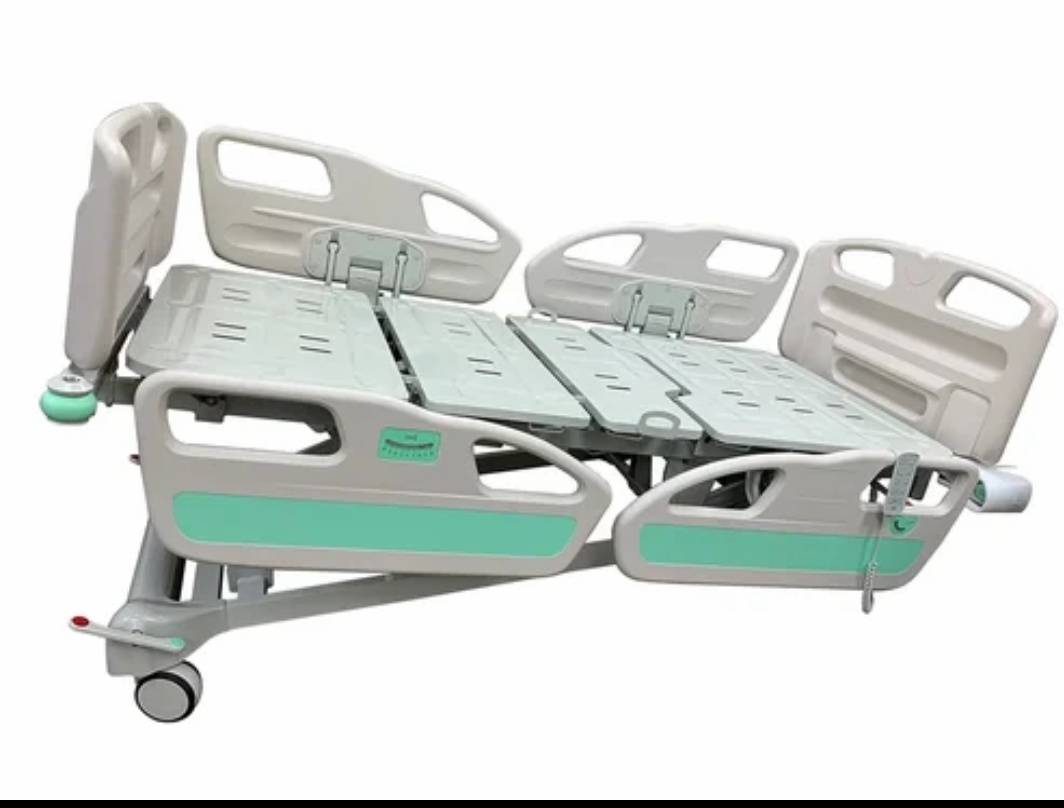 | Icu Bed Manufactured by Windlio International, Pune The Electric ICU Bed by Windlio International is designed to meet the modern needs of critical and... View product → |
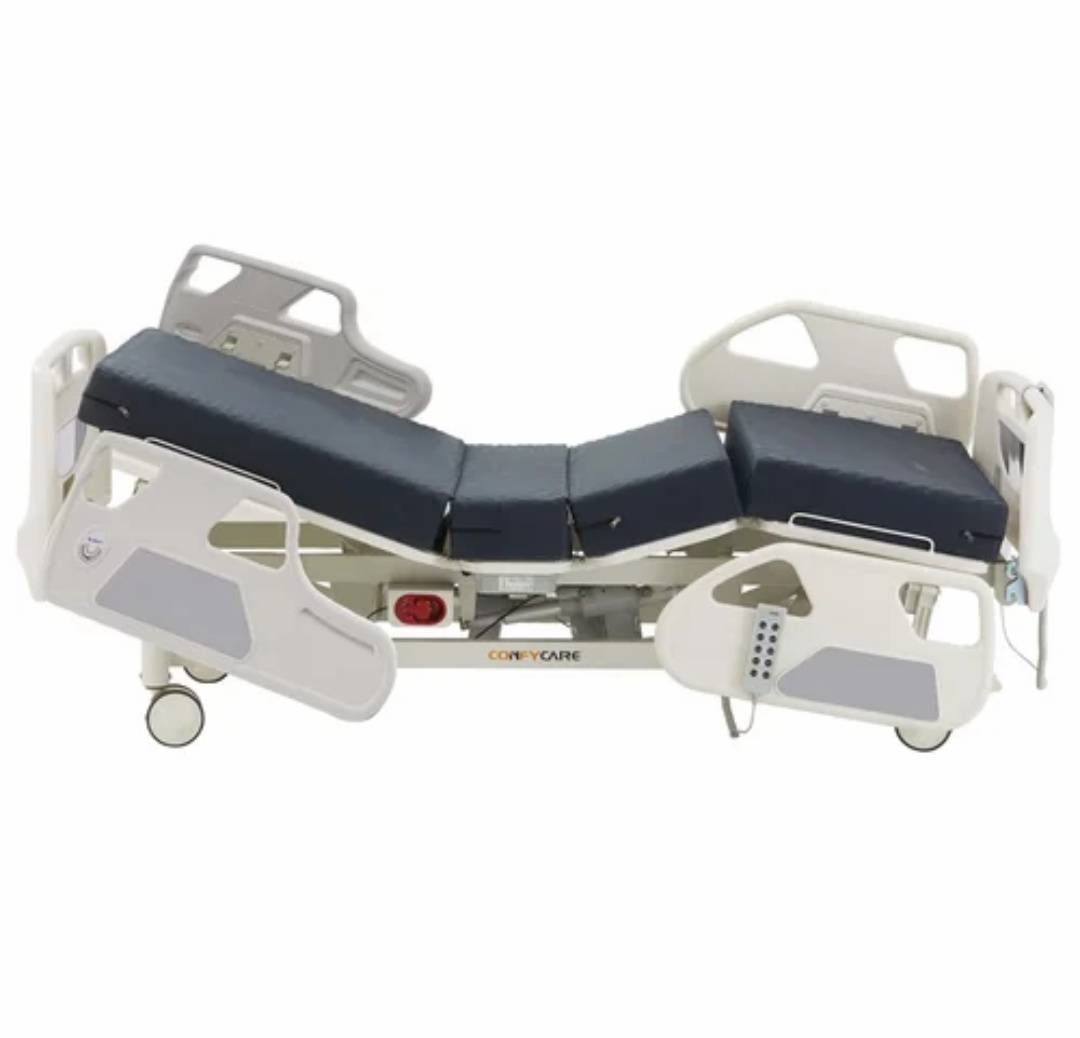 | Icu Bed 5 Function SS Electric ICU Bed 5 Function Stainless Steel Electric ICU Bed Manufactured by Windlio International, Pune The 5 Function SS Electric ICU Bed is a premium hospital bed... View product → |
Frequently asked questions
What do three, four, and five ICU bed functions control?
The functions describe powered movement axes. Three usually control backrest, knee-rest, and deck height; a fourth adds Trendelenburg, while a fifth adds reverse Trendelenburg. Confirm the manufacturer’s function count.
What should you check for CPR, imaging, and monitoring access?
Check for a rapid CPR release, clearance for imaging equipment, unobstructed access to the patient, and enough space for monitors, cables, and emergency equipment.
How do you compare ICU bed capacity, mattresses, rails, and movement?
Verify the safe working load, mattress dimensions and compatibility, rail operation, brake performance, and clearance for transferring and repositioning the patient.
What belongs in an ICU bed acceptance test?
Operate every movement, control, alarm, brake, rail, and emergency release. Confirm cleaning access, power backup, mattress fit, and staff access under realistic bedside conditions.
Related products
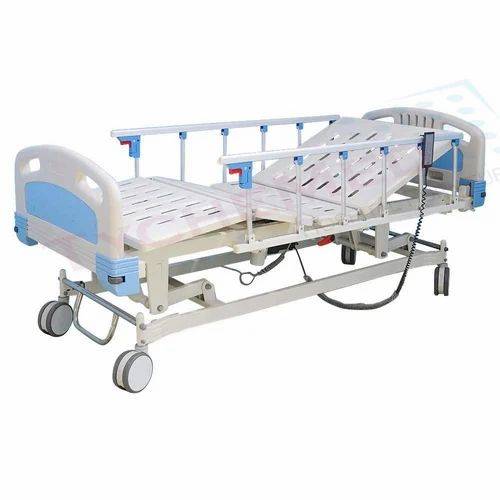 | Icu Bed 3 Function Fully Electric ICU Bed Manufactured by Windlio International, Pune The 3 Function Fully Electric ICU Bed by Windlio International is designed to deliver maximum safety,... View product → |
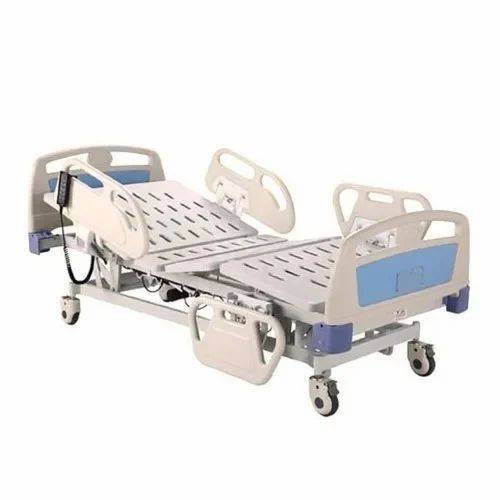 | Icu Bed Manufactured by Windlio International, Pune The 5 Function Electric ICU Bed from Windlio International is a high-performance, fully motorized... View product → |
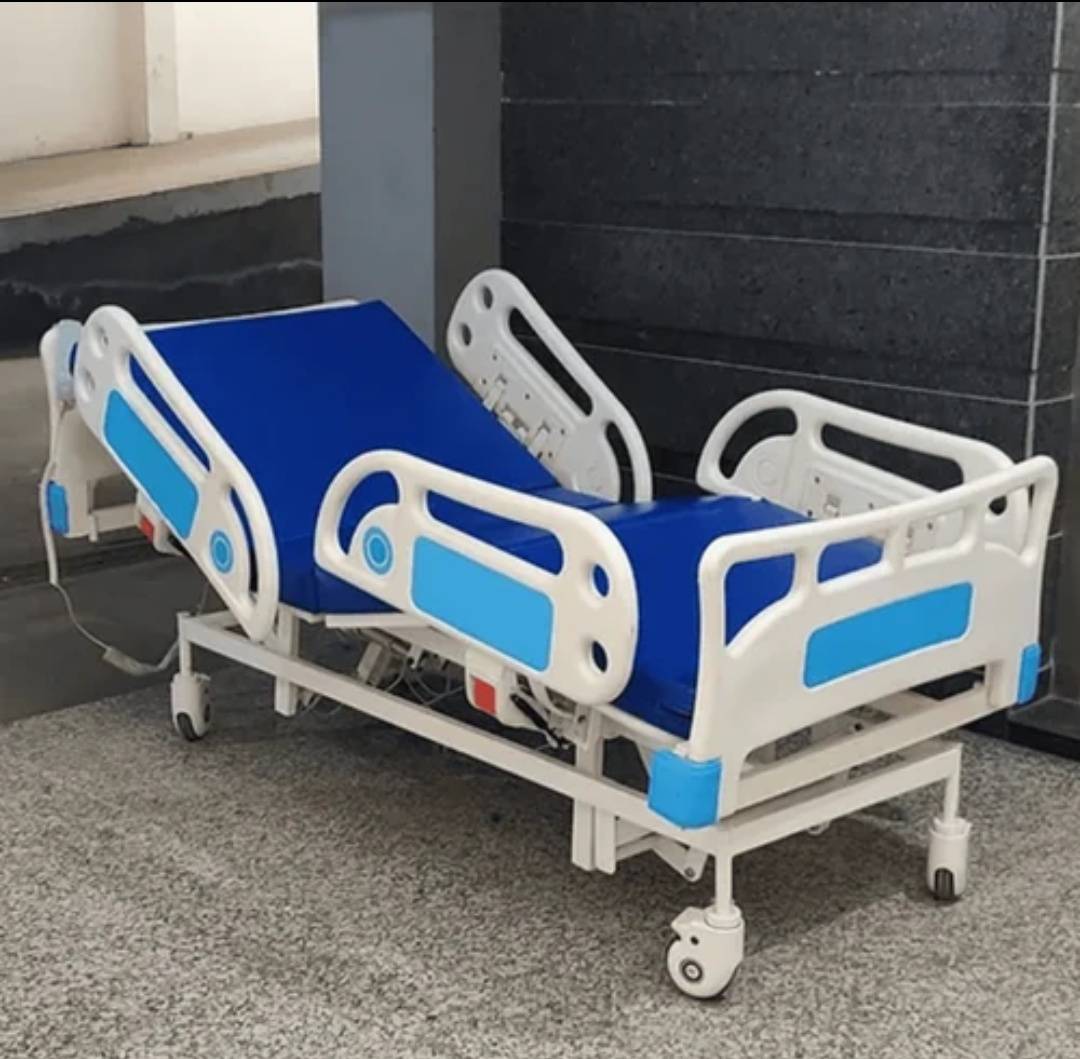 | Icu Bed 5 Function ABS Panel Electric ICU Bed Manufactured by Windlio International, Pune The 5 Function ABS Panel Electric ICU Bed by Windlio International is a technologically advanced patient... View product → |
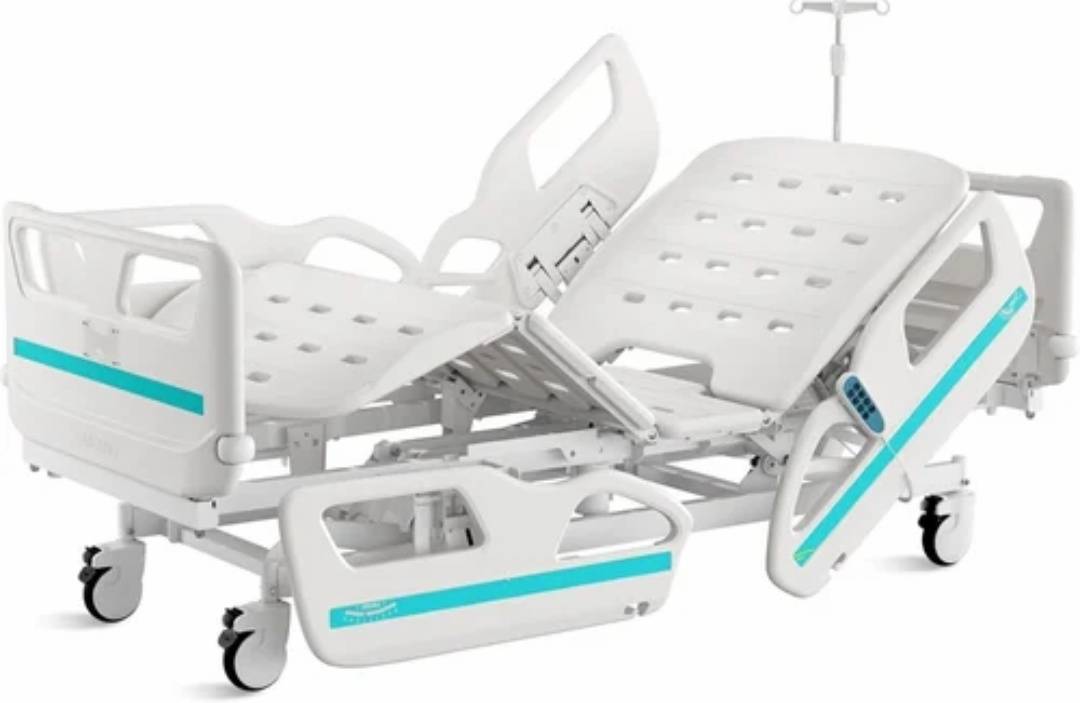 | Icu Bed Manufactured by Windlio International, Pune The 4 Function Electric ICU Bed by Windlio International is a high-performance hospital bed engineered... View product → |