Choosing rehabilitation equipment starts with the patient’s training goal, not the product label. By the end, you will be able to classify equipment by clinical use, match it to patient and facility constraints, and build a safer procurement specification with measurable performance and service requirements.
Key takeaways
- Match passive, assisted, strengthening, and mobility equipment to the therapy task.
- Check patient weight, height, range of motion, transfer ability, and supervision needs.
- Measure clearances, doorways, power points, flooring, and storage before ordering.
- Require cleaning instructions, safety features, warranty terms, training, and spare-part support.
Which equipment supports each rehabilitation and mobility goal?
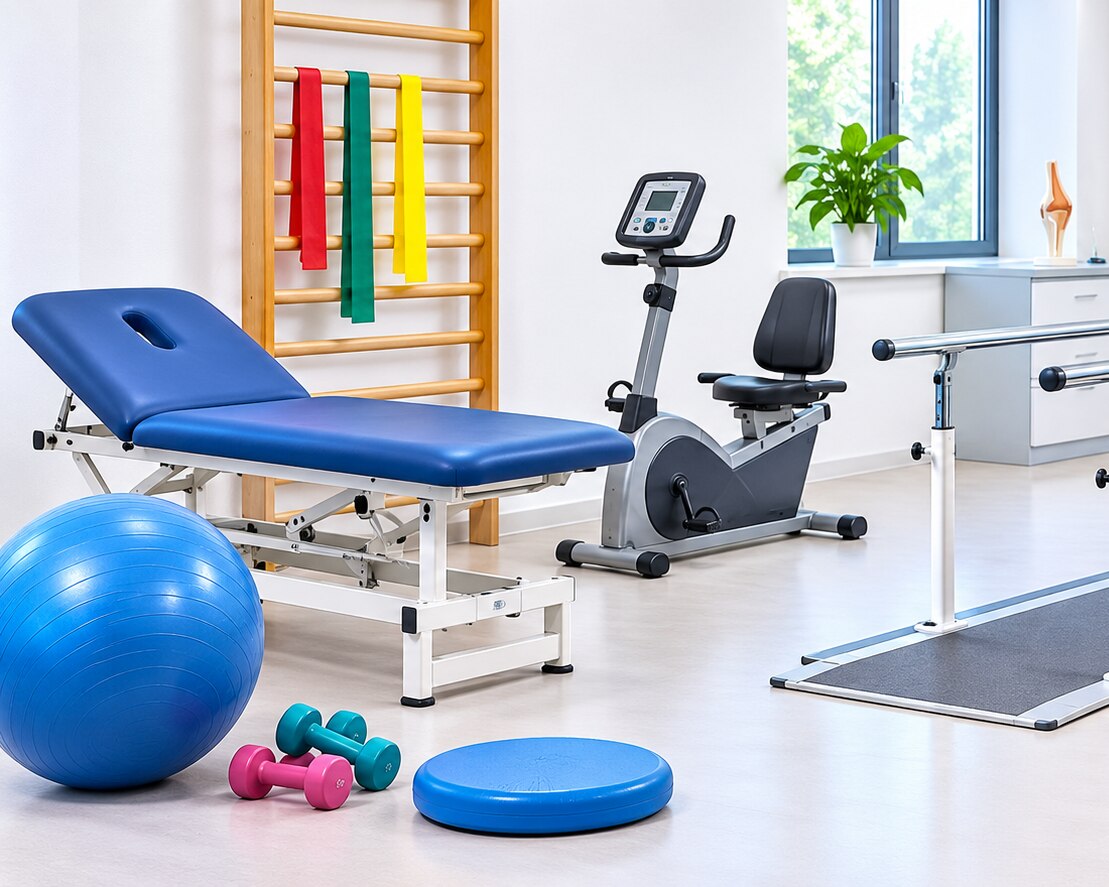
Physiotherapy equipment classification starts with the task being trained, not the product name. Passive range-of-motion equipment addresses joint movement; pulley systems and therapist-assisted devices support assisted exercise. Strengthening equipment includes resistance systems, therapy steps, exercise bikes, and treadmills for active muscle and cardiopulmonary conditioning.
- Balance training equipment includes balance boards and supported standing equipment for postural control.
- Gait training equipment includes parallel bars, walking frames, and rolling gait trainers for supported overground stepping.
- A body-weight-support treadmill uses a harness to unload a stated proportion of body weight; it is not interchangeable with a rolling gait trainer.
- Transfer aids, standing frames, and wheelchairs support transfers and functional mobility.
- Neurological rehabilitation equipment targets spasticity, contractures, coordination, and motor retraining through specialised supports, repetitive practice, and task feedback.
| Setting | Equipment focus | Typical purpose |
|---|---|---|
| Physiotherapy gym | Resistance systems, steps, bikes, treadmills, balance equipment | Strength, conditioning, balance, and progression |
| Treatment room | Passive range-of-motion equipment, pulleys, plinths, therapist-assisted devices | Assisted movement and hands-on treatment |
| Hydrotherapy area | Water-compatible steps, rails, floats, and transfer equipment | Reduced-load movement and conditioning |
| Gait laboratory | Instrumented treadmills, harness systems, force or motion analysis | Measured gait assessment and unloading trials |
| Home care | Walkers, transfer aids, wheelchairs, compact exercise equipment | Daily mobility and prescribed practice |
How should equipment match the patient and the therapy plan?
A device rating does not prescribe a patient’s load. Patient-specific equipment selection starts with weight capacity, height range, weight-bearing status, post-operative restrictions, pain, balance, cognition, spasticity, contractures, fall risk, and cardiopulmonary tolerance.
During physiotherapy assessment, the therapist identifies the safest transfer technique, guarding position, assistance level, and staffing requirement. After fracture, joint replacement, spinal injury, stroke, acute pain, or cardiopulmonary illness, the therapist prescribes loading and progression; a high device rating cannot override restricted weight-bearing or poor tolerance.
- Use a rolling gait trainer for supported overground stepping.
- Use a body-weight-support treadmill when unloading a stated proportion of body weight is part of treatment.
- Specify whether a harness provides positioning or unloading only. Treat it as fall-arrest equipment only when the complete system is designed and validated for arrest, with its attachment point, emergency lowering method, and maximum unloaded body weight stated.
- Treat parallel bars as rehabilitation aids, not fall-proof installations; anchoring, spacing, end clearance, floor construction, and asymmetric loading affect safety.
- Reassess fit and assistance as strength, balance, range of motion, and confidence improve.
| Option | Best match | Wrong choice when |
|---|---|---|
| Fixed wheelchair | Assisted mobility | Independent propulsion, standing practice, posture training, or variable terrain is required |
| Transport chair | Caregiver-propelled transfers | The user needs self-propulsion |
| Walker or gait trainer | Weight-supported stepping | The patient cannot safely grip, coordinate, or bear the prescribed load |
| Transfer chair | Short, supported transfers | Walking practice is the treatment goal |
At treatment, progression, and discharge, link equipment changes to gait speed, the six-minute walk test, sit-to-stand performance, balance assessment, range of motion, and activities of daily living. A cushion still requires seating assessment and pressure-relief practice.
What specifications and room measurements should you compare before purchase?
Compare the stated load, adjustment range, and failure controls—not just the catalogue’s maximum user weight. Ask whether each figure is a static safe working load, tested patient mass, or dynamic-use rating, and request the test conditions.
| Equipment | Specifications to compare | Failure or fit issue |
|---|---|---|
| Parallel bars and walking frames | Parallel bars specifications: handrail height, bar spacing, end clearance, anchoring, floor construction, height adjustment, and secure grips | Asymmetric pulling or transfer loading can overturn portable bars |
| Gait trainers and treadmills | Gait trainer vs body-weight-support treadmill: rolling support, harness rating, platform height, guard rails, emergency stop, adjustable stops, and pinch-point protection | A gait trainer supports overground stepping; a treadmill unloads a stated body-weight percentage |
| Plinths, bikes, steps, pulleys and balance boards | Minimum table height under load, platform height, resistance range, non-slip surfaces, locking parts, and cable protection | Excess height or an unguarded cable makes transfers and exercise unsafe |
| Lifts and standing equipment | Patient lift safe working load across the lift, spreader bar, sling, hooks, weighing module, and accessories; request open and closed base width, bed clearance, turning envelope, and stability data | A higher-rated column cannot make an incompatible sling safe |
For wheelchairs, record wheelchair dimensions and configuration: seat width and depth, seat-to-floor height, backrest height, footrests, cushion compatibility, brakes, wheel and caster size, axle position, anti-tip devices, turning radius, folding method, and maximum user weight.
- Measure door width, wheelchair approach space, transfer clearance, ramp gradient, turning radius, platform clearance, outlet access, and storage.
- For bariatric use, verify transfer width, hand-grip spacing, deflection, caster and brake capacity, upholstery shear, and accessory ratings.
How do you control safety, infection, accessibility, and downtime?
Rehabilitation equipment safety starts with a pre-use check: examine non-slip surfaces, locking casters, brakes, fasteners, cables, motors, moving joints, upholstery, emergency lowering, battery status, and electrical leads. A rated patient mass covers only a stated load case.
Sit-to-stand, abrupt sitting, side loading, and pulling on rails create different forces, so request static safe working load, tested maximum patient mass, dynamic-use rating, and test conditions.
Infection control physiotherapy equipment depends on cleanable construction, not disinfectant alone. Staff inspect seams, exposed fasteners, stitching, cracked polyurethane, porous foam, and damaged grips between patients.
- Follow the manufacturer’s approved disinfectant, dilution limit, contact time, rinse requirement, drying time, and material warnings; a stronger chemical can damage upholstery, controls, or electrical parts.
- Record daily checks, scheduled servicing, calibration, spare parts, expected downtime, and local examination rules. In the United Kingdom, LOLER patient lift inspection normally requires thorough examination at least every six months; that legal examination is separate from manufacturer certification.
Powered vs manual rehabilitation equipment involves different failure risks:
| Option | Main safeguard | Practical consequence |
|---|---|---|
| Powered | Charging, battery-failure plan, outlet access, electrical safety, noise control | Reduces therapist effort but creates downtime if power fails |
| Manual | Brake, caster, fastener, and joint checks | Avoids charging but increases therapist workload |
Check ramp access, transfer height, wheelchair approach space, and controls usable with limited hand strength. Assess whether anti-tip devices obstruct thresholds or transfers.
What should a rehabilitation equipment procurement brief require?
A physiotherapy equipment procurement checklist must turn the treatment plan into comparable specifications and acceptance tests, not a list of product names.
1. Define intended users: adult, child, bariatric, neurological, orthopedic, geriatric, or cardiorespiratory. State the training method, patient mass, static and dynamic loading conditions, room dimensions, accessories, and outcome measures such as gait speed, six-minute walk distance, range of motion, or sit-to-stand performance.
2. Request user manuals, installation instructions, staff training, warranty terms, service response time, replacement-part availability, calibration records, delivery access, commissioning tests, and total lifecycle cost. Rehabilitation equipment warranty and service must cover who repairs the unit, where, within what time, and with which parts.
3. Require the supplier to name the applicable electrical-safety standard for powered tables, hoists, treadmills, and chargers. IEC 60601-1 does not automatically apply to passive parallel bars, manual walkers, or non-electrical furniture.
4. For export, match the intended-purpose wording, risk documentation, clinical claims, Declaration of Conformity, and classification route under the EU Medical Device Regulation. “Rehabilitation equipment” is not a classification.
5. For bariatric rehabilitation equipment, specify transfer width, usable hand-grip spacing, structural deflection, caster and brake capacity, doorway and turning dimensions, upholstery shear, and accessory ratings for footrests, supports, and harnesses.
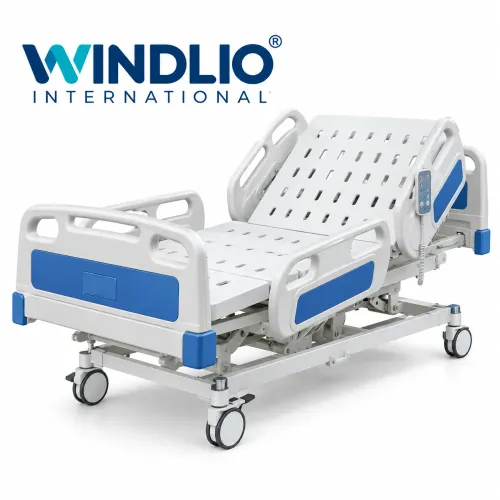
Windlio International is worth comparing when one supplier can coordinate rehabilitation furniture, powered equipment, documentation, delivery, commissioning, and after-sales support instead of leaving those risks across separate catalogue vendors.
Related product
 | Wheel Chair Windlio International is a trusted manufacturer and supplier of high-quality Fixed Wheelchairs in Pune, India. View product → |
Frequently asked questions
Which equipment supports different rehabilitation and mobility goals?
Passive range-of-motion devices support joint movement, while pulleys and therapist-assisted equipment support assisted exercise. Resistance systems, therapy steps, exercise bikes, and treadmills support strengthening and conditioning. Parallel bars, gait trainers, and balance equipment support mobility practice.
How should equipment match the patient and therapy plan?
Compare the equipment with the patient’s weight, height, mobility level, transfer ability, balance, joint range, strength, cognition, and supervision needs. Select adjustable equipment that supports the prescribed progression without creating avoidable fall or strain risks.
What specifications and room measurements should you compare?
Check maximum user weight, adjustment ranges, working dimensions, folded dimensions, access clearances, doorway width, ceiling height, floor loading, surface type, power requirements, noise, and storage space. Confirm that therapists can position themselves safely around the equipment.
How do you control safety, infection, accessibility, and downtime?
Specify guards, emergency stops, non-slip surfaces, locking casters, stable handholds, transfer access, and clear user limits. Require cleaning instructions for upholstery and high-touch surfaces, accessible controls, inspection schedules, warranty coverage, spare parts, and service response times.
What should a rehabilitation equipment procurement brief require?
State the therapy goals, patient profiles, room drawings, dimensions, utilities, cleaning agents, safety requirements, staff training, delivery constraints, installation scope, acceptance tests, documentation, warranty, preventive maintenance, spare parts, and downtime support.