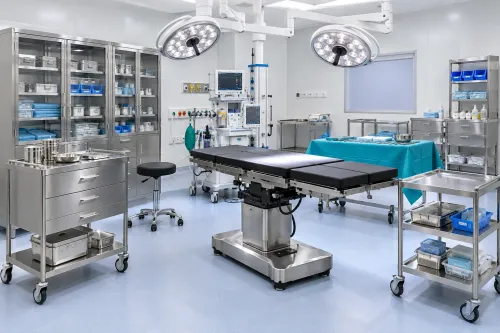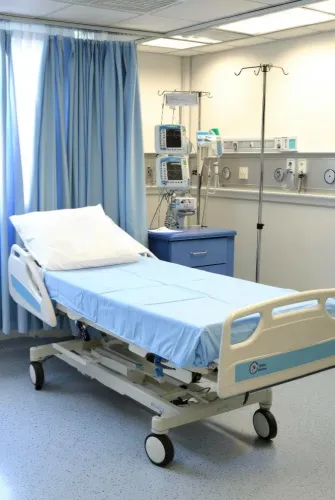

Hospital furniture procurement often involves dozens of individual specifications, multiple departments, delivery schedules, installation requirements, and internal approvals. A structured checklist can make the process easier for hospitals evaluating a Hospital Furniture Supplier.
The objective is not simply to identify who can quote the lowest amount. Procurement teams need to determine whether the proposed furniture is suitable for clinical use and whether the supplier can reliably fulfil the requirement.
Confirm the Product Scope
Start by checking whether the supplier can cover the required furniture categories.
Depending on the project, these may include:
- Hospital beds
- Examination couches
- Bedside units
- Overbed tables
- Medical trolleys
- Stretchers
- Stools
- Instrument tables
- Storage furniture
- OT furniture
Consolidated procurement can be useful, but only when product specifications remain appropriate for each department.
Review Technical Specifications
Two products with similar names can have very different construction and features.
Ask for clear information about dimensions, materials, frame construction, surface finish, adjustment mechanisms, castors, accessories, and available configurations.
Technical clarity makes quotation comparison significantly easier.
Check Clinical Suitability
Furniture should be assessed in the context where it will actually operate.
Questions worth asking include:
- Who will use the product?
- How frequently will it be used?
- Does it need to move regularly?
- What cleaning procedures will apply?
- What load will it typically handle?
- Is adjustment required?
- Does the room have sufficient clearance?
These questions prevent procurement decisions based purely on visual appearance.
Evaluate Manufacturing Access
There can be practical advantages when a supplier has direct access to manufacturing capabilities. Specification changes, product information, bulk quantity planning, and repeat procurement may become easier to coordinate.
Windlio International operates from Pune in the hospital furniture and medical equipment segment. Healthcare procurement teams assessing suppliers in Maharashtra can ask whether products are manufactured directly, sourced externally, or supplied through multiple vendors.
Knowing the supply structure can clarify responsibility.
Discuss Delivery Before Ordering
Delivery should not be treated as an afterthought.
Hospitals should establish:
- Required quantities
- Delivery location
- Building access
- Floor or department destination
- Expected dispatch schedule
- Phased delivery needs
- Assembly requirements
- Installation responsibilities
For new hospital projects, furniture delivery may need to align with interior completion, electrical work, medical gas installation, or commissioning schedules.
Review Support Arrangements
Hospital furniture contains components that may require adjustment, maintenance, or replacement during its usable life.
Ask the supplier what support is available after delivery. Understand whether commonly required parts or service assistance can be obtained.
This is especially relevant for products with mechanical adjustments, wheels, locks, moving sections, or accessories.
Verify Before Bulk Procurement
Where practical, healthcare institutions can evaluate detailed specifications or samples before approving large quantities.
A product review can reveal details that may not be obvious from photographs, including height, movement, accessibility, stability, finishing, and usability.
For dealers, consultants, and institutional procurement teams, this verification step can also reduce specification disputes.
Use a Requirement-Led Selection Process
A dependable Hospital Furniture Supplier should be able to provide clear product information, suitable configurations, consistent supply, realistic delivery communication, and appropriate support.
Hospitals in Pune and throughout Maharashtra can improve procurement outcomes by documenting requirements before requesting commercial proposals.
When supplier evaluation begins with clinical needs rather than price alone, the final furniture selection is more likely to support patient care, staff movement, housekeeping, maintenance, and the long-term operation of the healthcare facility.
Keywords